 中文
中文 English
MOSFET Selection for High-Voltage and Medium-Voltage Switching: AOW190A60C, AOD454A vs. China Alternatives VBN16R20S, VBE1410
Number of views:9999
 Back to previous page
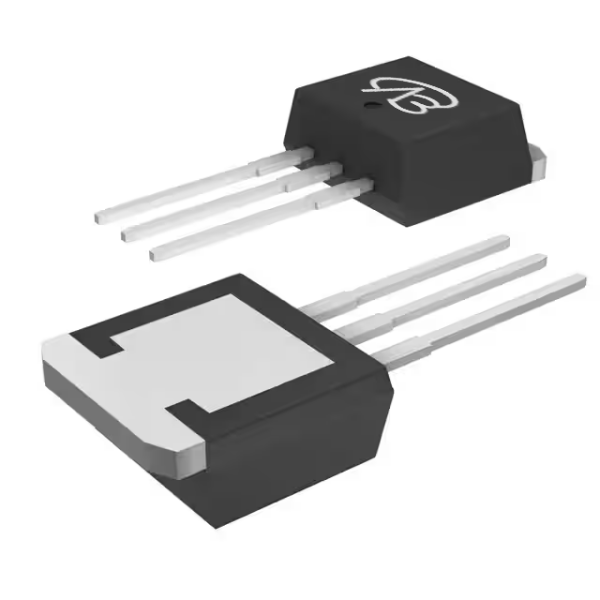
Comparative Analysis: AOW190A60C (600V N-channel) vs. VBN16R20S
Analysis of the Original Model (AOW190A60C) Core:
This is a 600V N-channel MOSFET from AOS in a TO-262 package. Its design core is to provide robust high-voltage switching capability with a focus on reliability in off-line or high-voltage circuits. Key advantages include a high drain-source voltage (Vdss) of 600V, a continuous drain current (Id) of 20A, and an on-resistance (RDS(on)) of 190mΩ at 10V gate drive. It is engineered for applications where high voltage blocking and moderate current handling are essential.
Compatibility and Differences of the Domestic Alternative (VBN16R20S):
VBsemi's VBN16R20S is a pin-to-pin compatible alternative in a TO-262 package. The key differences are in electrical parameters: VBN16R20S offers a significantly lower on-resistance of 150mΩ at 10V (compared to 190mΩ) while maintaining the same 600V voltage rating and 20A continuous current. This improvement in RDS(on) directly translates to lower conduction losses and potentially better efficiency. The device utilizes a SJ_Multi-EPI structure, enhancing its performance in high-voltage switching.
Key Application Areas:
Original Model AOW190A60C: Suitable for high-voltage, medium-current switching applications such as:
Off-line switch-mode power supplies (SMPS) like PFC stages, flyback converters.
Motor drives for appliances and industrial controls requiring 600V rating.
Inverters and UPS systems where high voltage blocking is critical.
Alternative Model VBN16R20S: With its lower on-resistance, it is an excellent drop-in replacement for efficiency upgrades in the same high-voltage applications. It is particularly advantageous in designs where reducing conduction loss and improving thermal performance are priorities, without compromising the 600V/20A rating.
Comparative Analysis: AOD454A (40V N-channel) vs. VBE1410
This comparison shifts focus to medium-voltage, high-current applications where low on-resistance and efficient switching in a compact package are paramount.
Analysis of the Original Model (AOD454A) Core:
The AOD454A from AOS is a 40V N-channel MOSFET in a TO-252 (DPAK) package. Its design pursues an optimal balance between low conduction loss and good switching performance. Core advantages include:
Low On-Resistance: 30mΩ at 10V gate drive, minimizing conduction losses.
High Current Capability: Continuous drain current of 20A.
Advanced Trench Technology: Enables low gate charge for fast switching.
Excellent Thermal Package: The DPAK package offers good thermal resistance, making it suitable for high-current load applications.
Compatibility and Differences of the Domestic Alternative (VBE1410):
VBsemi's VBE1410 is a performance-enhanced alternative in the same TO-252 package. It achieves substantial improvements in key parameters:
Significantly Lower On-Resistance: 12mΩ at 10V (and 14mΩ at 4.5V), drastically reducing conduction loss compared to the original's 30mΩ.
Much Higher Current Rating: A continuous drain current of 55A, far exceeding the original's 20A.
Maintained Voltage Rating: 40V Vdss, suitable for the same application domains.
Key Application Areas:
Original Model AOD454A: Ideal for medium-voltage applications requiring a balance of performance and package size:
Synchronous rectification in DC-DC converters (12V/24V input systems).
Load switches and power management in computing, automotive, and industrial boards.
Motor drive circuits for small to medium-sized brushed DC motors.
Alternative Model VBE1410: Suited for upgraded scenarios demanding higher efficiency, higher current capacity, and lower power dissipation. It is an excellent choice for:
High-current DC-DC converters and VRMs.
More demanding motor drives and solenoid controls.
Any application where replacing the AOD454A can yield significant efficiency gains and thermal headroom.
Summary
This analysis reveals two distinct selection pathways:
For high-voltage (600V) switching applications, the original AOW190A60C provides reliable performance with its 190mΩ on-resistance and 20A current. Its domestic alternative, VBN16R20S, offers a direct pin-compatible upgrade with a lower 150mΩ RDS(on), enabling higher efficiency and better thermal performance in the same circuit footprint, making it a compelling choice for design enhancements.
For medium-voltage, high-current (40V+) switching, the original AOD454A, with its 30mΩ on-resistance and 20A rating, is a solid performer in DPAK packages. The domestic alternative VBE1410 represents a major performance leap, featuring an ultra-low 12mΩ on-resistance and a robust 55A current rating. This makes it a superior choice for new designs or upgrades where maximizing current handling and minimizing losses are critical.
Core Conclusion: Selection is not about absolute superiority but precise requirement matching. In the context of supply chain diversification, domestic alternatives like VBN16R20S and VBE1410 not only provide reliable backup options but also deliver parameter advancements—offering engineers greater flexibility in design trade-offs, performance optimization, and cost control. Understanding the design philosophy and parameter implications of each device is key to unlocking its full potential in your circuit.

Download PDF document
 Download now


