 中文
中文 English
MOSFET Selection for Industrial & High-Voltage Applications: AOTF4185, AOTF9N90 vs. China Alternatives VBMB2412, VBMB19R07S
Number of views:9999
 Back to previous page
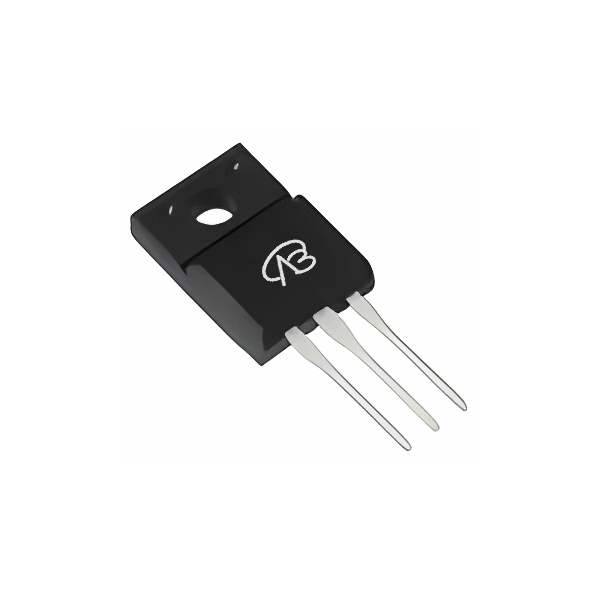
Comparative Analysis: AOTF4185 (P-channel) vs. VBMB2412
Analysis of the Original Model (AOTF4185) Core:
This is a -40V P-channel MOSFET from AOS, packaged in the TO-220FL. Its design core is to combine advanced trench MOSFET technology with a low-resistance package to achieve extremely low RDS(ON). The key advantages are: a low on-resistance of 16mΩ at a 10V gate drive and 20A, and a standard threshold voltage (Vgs(th)) of 1.7V for easy drive compatibility.
Compatibility and Differences of the Domestic Alternative (VBMB2412):
VBsemi's VBMB2412 is offered in a TO-220F package and serves as a functional pin-compatible alternative. The main differences lie in the enhanced electrical parameters: VBMB2412 specifies an on-resistance of just 12mΩ at 10V, which is lower than the original's 16mΩ. It also boasts a very high continuous drain current rating of -65A, significantly surpassing the original's capability, while maintaining the same -40V voltage rating.
Key Application Areas:
Original Model AOTF4185: Its low RDS(ON) and 40V rating make it very suitable for efficient load switching and battery protection circuits in industrial controls, power tools, or 24V-36V battery systems.
Alternative Model VBMB2412: With its superior current capability (65A) and lower on-resistance, it is an excellent upgrade choice for applications demanding higher efficiency and higher current handling in the same voltage class, such as high-current load switches, solenoid drivers, or motor control in compact industrial designs.
Comparative Analysis: AOTF9N90 (N-channel) vs. VBMB19R07S
This comparison shifts focus to high-voltage applications. The design pursuit for this N-channel MOSFET is achieving a reliable balance between high voltage blocking and manageable conduction loss.
Analysis of the Original Model (AOTF9N90) Core:
The core advantages of this 900V MOSFET from AOS are:
High Voltage Capability: A 900V drain-source voltage rating makes it suitable for off-line power supplies and industrial mains-derived circuits.
Balanced Performance: It offers a continuous current of 9A with an on-resistance of 1.3Ω at 10V gate drive, providing a practical compromise for medium-power high-voltage switching.
Compatibility and Differences of the Domestic Alternative (VBMB19R07S):
VBsemi's VBMB19R07S, also in a TO-220F package, represents a "performance-optimized" alternative. While the continuous current (7A) is slightly lower than the original's 9A, it achieves a major improvement in a key parameter: its on-resistance is significantly lower at 770mΩ (@10V) compared to the original's 1.3Ω. This is achieved using SJ_Multi-EPI technology, leading to substantially lower conduction losses.
Key Application Areas:
Original Model AOTF9N90: Its 900V/9A rating makes it a solid choice for applications like offline SMPS (e.g., PFC stages, flyback converters), industrial motor drives, and UPS systems operating from high-voltage rails.
Alternative Model VBMB19R07S: With its much lower RDS(ON), it is particularly suitable for high-voltage applications where efficiency and thermal performance are critical, and the slightly lower current rating is acceptable. This includes high-efficiency switched-mode power supplies, lighting ballasts, and auxiliary power supplies where reducing conduction loss is a priority.
Summary
In summary, this comparative analysis reveals two distinct selection paths based on application focus:
For medium-voltage P-channel applications requiring low loss, the original AOTF4185 provides a reliable solution with 16mΩ RDS(ON) and 40V rating for load switching and protection. Its domestic alternative VBMB2412 offers a compelling "performance-enhanced" option with significantly lower RDS(ON) (12mΩ) and a much higher current rating (65A), making it ideal for demanding upgrades in the same voltage class.
For high-voltage N-channel applications, the original AOTF9N90 offers a balanced 900V/9A/1.3Ω profile for robust offline power solutions. The domestic alternative VBMB19R07S provides a "efficiency-optimized" choice, trading a modest reduction in current rating (7A) for a dramatically lower on-resistance (770mΩ), which is highly valuable for improving efficiency and thermal management in high-voltage circuits.
The core conclusion is: Selection is about precise requirement matching. In the context of supply chain diversification, these domestic alternatives not only provide viable backup options but also offer specific parameter advantages—be it higher current or lower resistance—giving engineers greater flexibility and resilience in design trade-offs and cost control. Understanding the design philosophy and parameter implications of each device is essential to maximize its value in the circuit.

Download PDF document
 Download now


