 中文
中文 English
MOSFET Selection for High-Voltage Switching Applications: AOTF3N100, AOTF3N90 vs. China Alternatives VBMB195R03, VBMB19R05S
Number of views:9999
 Back to previous page
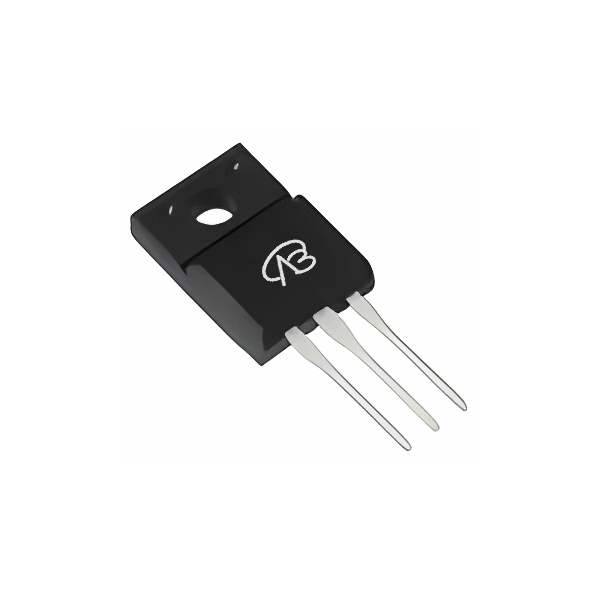
Comparative Analysis: AOTF3N100 (1000V N-channel) vs. VBMB195R03
Analysis of the Original Model (AOTF3N100) Core:
This is a 1000V N-channel MOSFET from AOS in a TO-220F package. Its design core is to provide robust high-voltage blocking capability for offline power supplies and industrial systems. Key advantages include a high drain-source voltage (Vdss) of 1000V and a continuous drain current (Id) of 2.8A. Its on-resistance (RDS(on)) is 6Ω at 10V gate drive and 1.5A, suitable for medium-power high-voltage switching.
Compatibility and Differences of the Domestic Alternative (VBMB195R03):
VBsemi’s VBMB195R03 is a direct pin-to-pin compatible alternative in a TO-220F package. The main differences are in electrical parameters: VBMB195R03 has a slightly lower voltage rating (950V) but offers a higher continuous current of 3A and a significantly lower on-resistance of 5400mΩ (5.4Ω) at 10V. This provides improved conduction performance while maintaining high-voltage capability.
Key Application Areas:
Original Model AOTF3N100: Ideal for applications requiring 1000V voltage rating, such as:
Offline switch-mode power supplies (SMPS) for industrial equipment.
Power factor correction (PFC) stages.
High-voltage lighting ballasts and inverters.
Alternative Model VBMB195R03: Suitable for high-voltage applications up to 950V where enhanced current handling (3A) and lower conduction loss are beneficial, such as upgraded SMPS designs or industrial switching circuits.
Comparative Analysis: AOTF3N90 (900V N-channel) vs. VBMB19R05S
This comparison focuses on 900V-class MOSFETs, where the design pursuit is optimizing switching efficiency and power handling in high-voltage circuits.
Analysis of the Original Model (AOTF3N90) Core:
The AOTF3N90 from AOS offers a 900V voltage rating with a continuous current of 2.4A and an on-resistance of 6.7Ω at 10V gate drive. Its core advantage is providing reliable 900V switching in a cost-effective TO-220F package, suitable for standard high-voltage power applications.
Compatibility and Differences of the Domestic Alternative (VBMB19R05S):
VBsemi’s VBMB19R05S represents a significant performance enhancement. While maintaining the same 900V voltage rating and TO-220F package compatibility, it offers a much higher continuous current of 5A and a dramatically lower on-resistance of 1500mΩ (1.5Ω) at 10V. This is achieved using a Super Junction Multi-EPI technology, enabling higher efficiency and power density.
Key Application Areas:
Original Model AOTF3N90: Suitable for standard 900V applications such as:
AC-DC power supplies for appliances and consumer electronics.
Motor drives and inverters operating below 900V.
Auxiliary power supplies in industrial systems.
Alternative Model VBMB19R05S: Ideal for high-performance 900V applications demanding higher current (5A) and much lower conduction loss. Perfect for:
High-efficiency, high-power-density SMPS.
Motor drives requiring higher current capability.
Upgraded designs where thermal performance and efficiency are critical.
Conclusion:
This analysis reveals two distinct selection paths for high-voltage MOSFETs:
For 1000V-class applications, the original AOTF3N100 provides essential high-voltage blocking (1000V). Its domestic alternative VBMB195R03 offers a compelling upgrade with higher current (3A) and lower on-resistance (5.4Ω) at a slightly lower voltage (950V), making it suitable for performance-enhanced designs.
For 900V-class applications, the original AOTF3N90 serves standard needs. The domestic alternative VBMB19R05S delivers substantial performance gains with significantly higher current (5A) and drastically lower on-resistance (1.5Ω), making it a superior choice for next-generation high-efficiency, high-power designs.
The core takeaway is that selection depends on precise requirement matching. Domestic alternatives not only provide supply chain resilience but also offer performance advantages in key parameters, giving engineers greater flexibility in design optimization and cost management. Understanding each device's specifications is essential to leverage its full potential in your circuit.

Download PDF document
 Download now


