 中文
中文 English
MOSFET Selection for Medium-Power Applications: AOTF2610L, AOD2916 vs. China Alternatives VBMB1615, VBE1104N
Number of views:9999
 Back to previous page
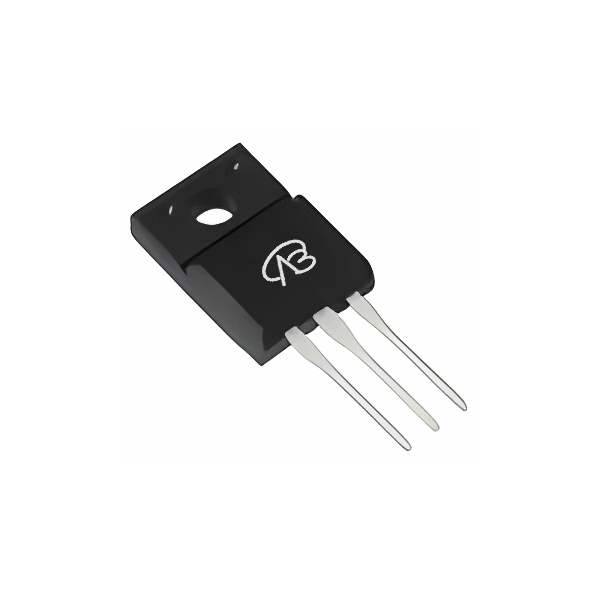
Analysis of the Original Model (AOTF2610L) Core:
This is a 60V N-channel MOSFET from AOS in a TO-220F package. Its design core is to balance good current handling and thermal performance in a classic through-hole format. Key advantages are: a low on-resistance of 10.7mΩ at a 10V gate drive, and a high continuous drain current rating of 35A (at specified conditions). This makes it a robust choice for various medium-power switching applications.
Compatibility and Differences of the Domestic Alternative (VBMB1615):
VBsemi's VBMB1615 is offered in the same TO-220F package, providing direct pin-to-pin compatibility. The main parameter comparison shows: VBMB1615 matches the 60V voltage rating and offers a comparable on-resistance of 10mΩ at 10V. Its continuous current rating is a robust 70A, significantly higher than the original, indicating a potential margin for lower conduction loss and higher power handling.
Key Application Areas:
Original Model AOTF2610L: Its combination of 60V rating, low RDS(on), and 35A current capability makes it suitable for:
- DC-DC converters and voltage regulators in 12V/24V/48V systems.
- Motor drives for medium-power brushed DC or stepper motors.
- Power switches in industrial controls and automotive auxiliary systems.
Alternative Model VBMB1615: With its higher current rating (70A) and similar low RDS(on), it is well-suited for applications demanding higher power density, lower losses, or an upgrade path from the original, such as in more demanding power supplies or motor drives.
Comparative Analysis: AOD2916 (N-channel) vs. VBE1104N
Analysis of the Original Model (AOD2916) Core:
This is a 100V N-channel MOSFET from AOS in a TO-252 (DPAK) surface-mount package. It is designed for high-voltage switching where space is a consideration. Its core strengths are a 100V drain-source voltage rating and a high continuous current of 50A, with an on-resistance of 43.5mΩ at 4.5V gate drive.
Compatibility and Differences of the Domestic Alternative (VBE1104N):
VBsemi's VBE1104N is also in a TO-252 package, ensuring footprint compatibility. The key differences are: VBE1104N matches the 100V rating but has a lower continuous current rating of 40A. However, it offers a significantly improved on-resistance of 35mΩ at 4.5V (and 30mΩ at 10V), which can lead to better efficiency and reduced heat generation.
Key Application Areas:
Original Model AOD2916: Its 100V/50A capability in a compact SMD package makes it ideal for:
- Primary-side switches or synchronous rectification in off-line SMPS (Switch-Mode Power Supplies).
- Motor drives and solenoid controls in automotive or industrial settings requiring 100V ratings.
- Power management in telecom or computing infrastructure.
Alternative Model VBE1104N: With its superior on-resistance performance, it is an excellent choice for applications where switching efficiency and thermal management are critical, even if the peak current requirement is slightly below 50A, such as in high-efficiency DC-DC converters or motor drives prioritizing low loss.
In summary, this comparison reveals two distinct substitution strategies:
For the 60V N-channel application (AOTF2610L), the domestic alternative VBMB1615 offers a significant upgrade in current handling (70A vs. 35A) while maintaining a low on-resistance, making it a powerful choice for designs seeking higher power capability or increased reliability margin.
For the 100V N-channel application (AOD2916), the domestic alternative VBE1104N trades a portion of the current rating (40A vs. 50A) for a substantially lower on-resistance, positioning it as a superior choice for applications where conduction loss and efficiency are paramount over absolute peak current.
The core conclusion is that selection hinges on precise requirement matching. These domestic alternatives (VBMB1615, VBE1104N) provide not only viable pin-to-pin replacements but also opportunities for performance optimization—either through increased current capacity or reduced conduction losses—offering engineers greater flexibility in design trade-offs and supply chain resilience.

Download PDF document
 Download now


