 中文
中文 English
MOSFET Selection for High-Voltage Power Applications: AOTF22N50, AOU2N60 vs. China Alternatives VBMB15R18S, VBFB165R02
Number of views:9999
 Back to previous page
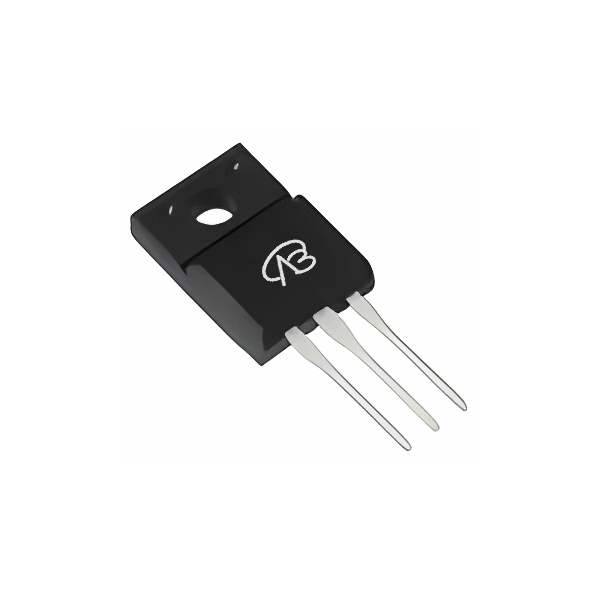
Comparative Analysis: AOTF22N50 (N-channel) vs. VBMB15R18S
Analysis of the Original Model (AOTF22N50) Core:
This is a 500V N-channel MOSFET from AOS in a TO-220F package. Its design focuses on reliable high-voltage switching with robust current handling. Key advantages include a high drain-source voltage (Vdss) of 500V, a continuous drain current (Id) of 22A, and an on-resistance (RDS(on)) of 260mΩ at 10V. It suits applications requiring steady performance in medium-to-high power circuits.
Compatibility and Differences of the Domestic Alternative (VBMB15R18S):
VBsemi’s VBMB15R18S is a pin-to-pin compatible alternative in a TO-220F package. The main differences are in electrical parameters: VBMB15R18S offers a similar 500V voltage rating but a slightly lower continuous current of 18A. However, it features a lower on-resistance of 210mΩ at 10V, which can reduce conduction losses in high-voltage applications.
Key Application Areas:
- Original Model AOTF22N50: Ideal for high-voltage, medium-current applications such as:
- Switch-mode power supplies (SMPS) in industrial or telecom systems.
- Power factor correction (PFC) stages.
- Motor drives and inverter circuits operating up to 500V.
- Alternative Model VBMB15R18S: Suitable for similar high-voltage applications where lower conduction loss is prioritized, though with a slightly reduced current margin (up to 18A). It fits well in cost-sensitive designs requiring efficient 500V switching.
Comparative Analysis: AOU2N60 (N-channel) vs. VBFB165R02
This comparison highlights solutions for lower-current, high-voltage switching needs, where compactness and efficiency are key.
Analysis of the Original Model (AOU2N60) Core:
The AOU2N60 from AOS is a 600V N-channel MOSFET in a TO-251-3 package. It targets low-power, high-voltage applications with a focus on space savings and adequate performance. Its parameters include a Vdss of 600V, a continuous drain current of 2A, and an on-resistance of 4.4Ω at 10V. This makes it suitable for light-load switching where voltage withstand is critical.
Compatibility and Differences of the Domestic Alternative (VBFB165R02):
VBsemi’s VBFB165R02 is a direct alternative in a TO-251 package. It offers a higher voltage rating of 650V and a similar continuous current of 2A. However, its on-resistance is significantly higher at 4300mΩ (4.3Ω) at 10V, indicating it is optimized for very low-current, high-voltage scenarios where switching loss may be less critical than cost and availability.
Key Application Areas:
- Original Model AOU2N60: Best for compact, high-voltage, low-current applications such as:
- Auxiliary power supplies in appliances or industrial controls.
- LED lighting drivers.
- Low-power AC-DC converters or snubber circuits.
- Alternative Model VBFB165R02: More suited for applications requiring a higher voltage margin (650V) with similar low-current handling (2A). Its higher on-resistance makes it a cost-effective choice for non-critical conduction loss scenarios, like standby power circuits or protection switches.
Conclusion:
This analysis reveals two distinct selection paths for high-voltage MOSFETs:
For medium-power, 500V applications, the original AOTF22N50 offers a strong balance of 22A current and 260mΩ on-resistance, making it reliable for SMPS and motor drives. Its domestic alternative VBMB15R18S provides a compatible option with lower on-resistance (210mΩ) for improved efficiency, though with a slightly reduced current rating (18A), ideal for cost-effective upgrades.
For low-power, high-voltage (600V+) applications, the original AOU2N60 delivers compact, efficient switching for light loads. The domestic alternative VBFB165R02 extends the voltage rating to 650V while maintaining 2A current, serving as a viable backup for space-constrained, high-voltage designs where conduction loss is secondary to voltage endurance and cost.
The core insight: Selection depends on precise requirement matching. In a diversified supply chain, domestic alternatives like VBMB15R18S and VBFB165R02 not only offer reliable backups but also provide parameter enhancements in specific areas, giving engineers greater flexibility in design trade-offs and cost management. Understanding each device’s design philosophy and parameter implications is key to maximizing its value in your circuit.

Download PDF document
 Download now


