 中文
中文 English
MOSFET Selection for High-Power and Dual-Channel Applications: AOT470, AOSD21313C vs. China Alternatives VBM1805, VBA4317
Number of views:9999
 Back to previous page
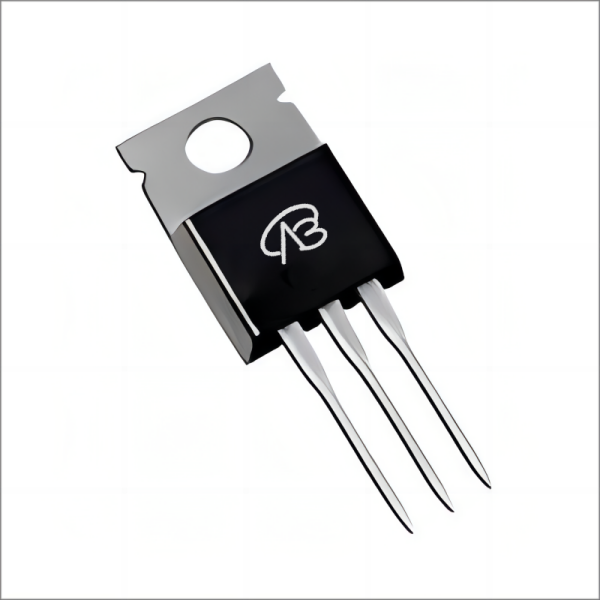
Comparative Analysis: AOT470 (N-channel) vs. VBM1805
Analysis of the Original Model (AOT470) Core:
This is a 75V N-channel MOSFET from AOS in a TO-220 package. Its design core is to deliver extremely high current capability in a standard power package. The key advantages are: a very high continuous drain current rating of 200A and a low on-resistance of 10.5mΩ at a 10V gate drive. This combination makes it suitable for applications demanding minimal conduction loss under high current.
Compatibility and Differences of the Domestic Alternative (VBM1805):
VBsemi's VBM1805, also in a TO-220 package, serves as a pin-to-pin compatible alternative. The main differences are in the electrical parameters: VBM1805 offers a slightly higher voltage rating (80V) and a significantly lower on-resistance of 4.8mΩ at 10V. While its rated continuous current (160A) is lower than the AOT470's peak rating, its vastly improved RDS(on) promises lower conduction losses and potentially better thermal performance in many high-current scenarios.
Key Application Areas:
Original Model AOT470: Ideal for very high-current switching applications up to 200A in 48V-75V systems. Typical uses include:
High-power DC-DC converters and inverters.
Motor drives for industrial equipment or electric vehicles.
Primary side switches in high-power SMPS.
Alternative Model VBM1805: Suited as a high-performance upgrade for applications where ultra-low conduction loss (4.8mΩ) is prioritized over the absolute peak current rating of 200A. Excellent for high-efficiency 48V-80V systems, server power supplies, and upgraded motor controllers where thermal management is critical.
Comparative Analysis: AOSD21313C (Dual P-channel) vs. VBA4317
This dual P-channel MOSFET is designed for space-constrained applications requiring complementary high-side switching or load management.
Analysis of the Original Model (AOSD21313C) Core:
This AOS part integrates two -30V P-channel MOSFETs in a compact SOIC-8 package. Its core advantages are integration and balanced performance: each channel offers 5.7A continuous current with an on-resistance of 32mΩ at 10V gate drive. This provides a compact solution for dual high-side switches or power path management.
Compatibility and Differences of the Domestic Alternative (VBA4317):
VBsemi's VBA4317 is a direct pin-to-pin compatible dual P-channel alternative in SOP8. It demonstrates parameter enhancement: it supports the same -30V voltage but offers a higher continuous current rating of -8A per channel. Crucially, it features a lower on-resistance of 21mΩ at 10V (and 28mΩ at 4.5V), indicating better efficiency and lower heat generation compared to the original.
Key Application Areas:
Original Model AOSD21313C: Fits applications needing dual P-channel switches in minimal board space for 12V-24V systems. Typical uses include:
Load switches and power distribution in motherboards, networking gear.
Battery protection and management circuits.
High-side driving in compact motor control or power management units.
Alternative Model VBA4317: A superior choice for upgraded designs requiring higher current capacity (-8A) and significantly lower conduction loss (21mΩ@10V) in the same compact footprint. Ideal for more demanding dual high-side switching, power multiplexing, or battery management in portable devices and embedded systems.
Summary
This analysis reveals two distinct selection paths:
For ultra-high-current N-channel applications, the original AOT470, with its formidable 200A rating, is targeted at the most demanding high-power circuits. Its domestic alternative VBM1805, while having a slightly lower current rating (160A), offers a major advantage in conduction efficiency with its ultra-low 4.8mΩ RDS(on), making it a compelling performance-enhanced choice for designs where minimizing loss is paramount.
For integrated dual P-channel applications, the original AOSD21313C provides a compact, balanced solution. Its domestic alternative VBA4317 delivers clear performance gains with higher current per channel (-8A) and lower on-resistance (21mΩ@10V), positioning it as an excellent upgrade for efficiency-sensitive, space-constrained designs.
The core conclusion is that selection hinges on precise requirement matching. Domestic alternatives like VBM1805 and VBA4317 not only provide reliable, pin-compatible options but also offer significant performance improvements in key parameters, granting engineers greater flexibility in optimizing for efficiency, thermal performance, and cost in their power designs.

Download PDF document
 Download now


