 中文
中文 English
MOSFET Selection for High-Power and Compact Switching: AOT410L, AON7400A vs. China Alternatives VBM1105, VBQF1303
Number of views:9999
 Back to previous page
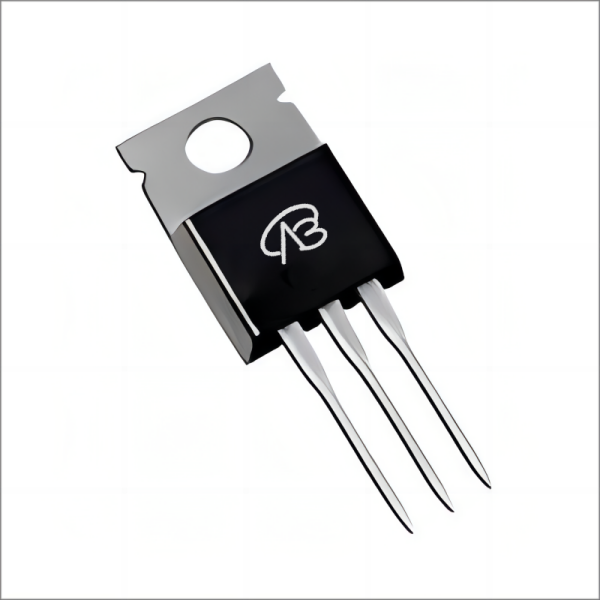
Comparative Analysis: AOT410L (N-channel) vs. VBM1105
Analysis of the Original Model (AOT410L) Core:
This is a 100V N-channel MOSFET from AOS in a TO-220 package. Its design focuses on delivering robust high-current performance in power applications. Key advantages include: a low on-resistance of 6.5mΩ at 10V drive, and a high continuous drain current rating of 150A (note: 12A is often referenced under specific conditions, with 150A representing peak capability). It offers reliable power handling for demanding circuits.
Compatibility and Differences of the Domestic Alternative (VBM1105):
VBsemi’s VBM1105 is a pin-to-pin compatible alternative in the same TO-220 package. It provides enhanced electrical parameters: the same 100V voltage rating, but a lower on-resistance of 5mΩ at 10V and a high continuous current of 120A. This represents a performance upgrade in conduction loss and current capacity.
Key Application Areas:
- Original Model AOT410L: Ideal for high-power applications requiring strong current handling and voltage endurance, such as:
- High-current DC-DC converters and power supplies.
- Motor drives for industrial equipment or electric vehicles.
- Inverters and high-side switches in robust power systems.
- Alternative Model VBM1105: Suited for upgraded scenarios demanding lower conduction loss and higher current capability (up to 120A), offering improved efficiency in similar high-power applications.
Comparative Analysis: AON7400A (N-channel) vs. VBQF1303
Analysis of the Original Model (AON7400A) Core:
This 30V N-channel MOSFET from AOS uses a compact DFN-8 (3x3) package. It combines advanced trench MOSFET technology with a low-resistance package to achieve very low on-resistance. Key features include: an on-resistance of 7.5mΩ at 10V, continuous current of 40A, and fast switching performance, making it excellent for space-constrained, efficiency-focused designs.
Compatibility and Differences of the Domestic Alternative (VBQF1303):
VBsemi’s VBQF1303 is a direct pin-to-pin alternative in the same DFN-8 (3x3) package. It delivers superior performance: the same 30V voltage rating, but a significantly lower on-resistance of 3.9mΩ at 10V (and 5mΩ at 4.5V), and a higher continuous current of 60A. This enables lower losses and higher power density.
Key Application Areas:
- Original Model AON7400A: Perfect for compact, high-efficiency applications such as:
- High-side switching in switch-mode power supplies (SMPS).
- Power management in portable devices, IoT modules, and consumer electronics.
- General-purpose switching where space and efficiency are critical.
- Alternative Model VBQF1303: Excellent for enhanced designs requiring ultra-low on-resistance and higher current (up to 60A), ideal for advanced DC-DC converters, high-density power modules, and applications demanding maximum efficiency in minimal space.
Summary:
This comparison reveals two clear selection paths:
- For high-power applications using the AOT410L, the domestic alternative VBM1105 offers a performance upgrade with lower on-resistance (5mΩ vs. 6.5mΩ) and high current capability (120A), making it a strong choice for efficiency-driven high-power designs.
- For compact, high-efficiency applications using the AON7400A, the domestic alternative VBQF1303 provides significant performance gains with much lower on-resistance (3.9mΩ vs. 7.5mΩ) and higher current (60A vs. 40A), enabling superior power density and thermal performance.
Core Conclusion:
Selection depends on precise requirement matching. Domestic alternatives like VBM1105 and VBQF1303 not only offer reliable compatibility but also deliver enhanced parameters in key areas, providing engineers with flexible, high-performance options for design optimization and cost efficiency. Understanding each device’s design philosophy and parameters ensures maximum value in your circuit.

Download PDF document
 Download now


