 中文
中文 English
MOSFET Selection for High-Voltage Power Applications: AOT25S65L, AOTF3N80 vs. China Alternatives VBM165R25S and VBMB185R05
Number of views:9999
 Back to previous page
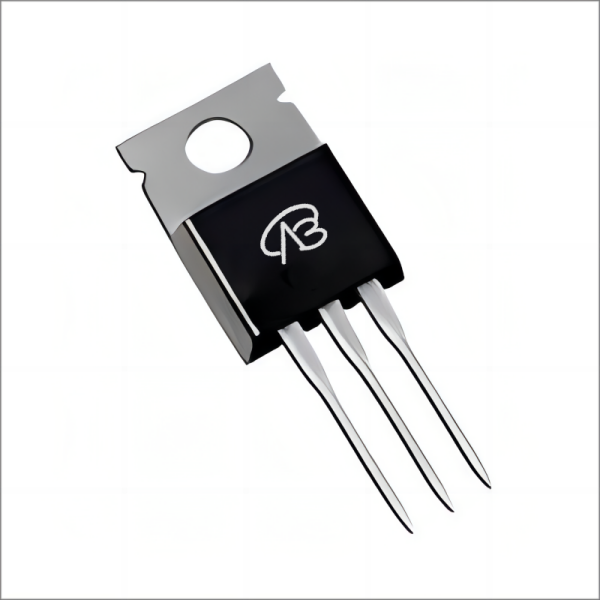
Comparative Analysis: AOT25S65L (650V N-channel) vs. VBM165R25S
Analysis of the Original Model (AOT25S65L) Core:
This is a 650V N-channel MOSFET from AOS in a TO-220 package. Its design core is to provide a reliable and efficient switching solution for medium-to-high power offline applications. Key advantages include: a high continuous drain current rating of 25A and an on-resistance (RDS(on)) of 190mΩ at 10V gate drive. This combination offers a solid balance for applications requiring good current handling and manageable conduction losses in a standard through-hole package.
Compatibility and Differences of the Domestic Alternative (VBM165R25S):
VBsemi's VBM165R25S is a direct pin-to-pin compatible alternative in the same TO-220 package. The main differences are in the electrical parameters: while it matches the 650V voltage rating and 25A continuous current, the VBM165R25S features a significantly lower on-resistance of 115mΩ at 10V. This indicates a potential for reduced conduction losses and improved efficiency compared to the original part.
Key Application Areas:
Original Model AOT25S65L: Well-suited for 650V-rated systems requiring dependable 25A current capability. Typical applications include:
Switch Mode Power Supplies (SMPS): PFC stages, flyback, or forward converters.
Motor Drives: Inverters for appliances and industrial controls.
UPS and Inverter Systems: Power switching stages.
Alternative Model VBM165R25S: Offers a performance-enhanced choice for the same application spaces, particularly where lower conduction loss and higher efficiency are desired, thanks to its superior 115mΩ RDS(on).
Comparative Analysis: AOTF3N80 (800V N-channel) vs. VBMB185R05
This comparison focuses on higher voltage MOSFETs where voltage withstand capability and application-specific current needs are paramount.
Analysis of the Original Model (AOTF3N80) Core:
This 800V N-channel MOSFET from AOS in an TO-220F (isolated) package is designed for high-voltage, lower-current switching. Its core advantages are a high 800V drain-source voltage (Vdss) rating and an on-resistance of 4.8Ω at 10V gate drive for a 2.8A continuous current. The TO-220F package provides basic isolation for thermal management.
Compatibility and Differences of the Domestic Alternative (VBMB185R05):
VBsemi's VBMB185R05 is a pin-to-pin compatible alternative in the TO-220F package. The key differences are substantial: it offers a higher voltage rating of 850V and a higher continuous current rating of 5A. However, its on-resistance is also higher at 2200mΩ (2.2Ω) at 10V. This creates a different performance profile—higher voltage/current margin but with higher conduction loss.
Key Application Areas:
Original Model AOTF3N80: Suitable for applications requiring an 800V breakdown and currents around 2.8A, such as:
Low-Power Offline SMPS: Auxiliary power supplies, LED lighting drivers.
Snubber Circuits or Clamping Circuits.
Alternative Model VBMB185R05: Targets applications that prioritize a higher voltage safety margin (850V) and potentially higher peak current handling (5A), but where the higher RDS(on) is acceptable for the circuit's power level. This could be useful in certain ruggedized or high-surge environments.
Conclusion
In summary, this analysis reveals two distinct selection paths for high-voltage designs:
For 650V medium-power applications, the original AOT25S65L provides a reliable 25A solution. Its domestic alternative VBM165R25S emerges as a performance-enhanced option, offering significantly lower on-resistance (115mΩ vs. 190mΩ) for reduced conduction losses in similar applications like SMPS and motor drives.
For 800V+ lower-power applications, the original AOTF3N80 serves specific needs with its 800V/2.8A rating. Its domestic alternative VBMB185R05 follows a specification-shifted approach, trading higher on-resistance for increased voltage (850V) and current (5A) ratings, catering to designs where these margins are more critical than ultra-low RDS(on).
The core conclusion is that selection hinges on precise requirement matching. In the context of supply chain diversification, domestic alternatives not only provide viable backups but can also offer superior performance in key parameters (like VBM165R25S's lower RDS(on)) or tailored specifications (like VBMB185R05's higher Vdss/Id), giving engineers greater flexibility in design trade-offs and cost optimization. Understanding each device's parameter implications is essential to leveraging its full value in the circuit.

Download PDF document
 Download now


