 中文
中文 English
MOSFET Selection for Power Applications: AOT1608L, AOSP32368 vs. China Alternatives VBM1603, VBA1305
Number of views:9999
 Back to previous page
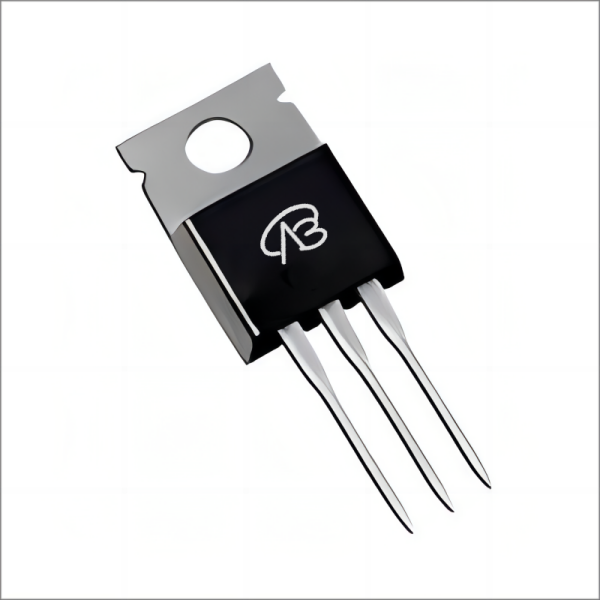
Comparative Analysis: AOT1608L (N-channel, TO-220) vs. VBM1603
Analysis of the Original Model (AOT1608L) Core:
This is a 60V N-channel MOSFET from AOS in a TO-220 package. Its design core is to deliver high current capability with low conduction loss in a standard power package. Key advantages are: a low on-resistance of 7.6mΩ at a 10V gate drive, and a high continuous drain current rating of 20A. Its 3.7V typical threshold voltage ensures good noise immunity.
Compatibility and Differences of the Domestic Alternative (VBM1603):
VBsemi's VBM1603 is a direct pin-to-pin compatible alternative in the TO-220 package. The main differences are in electrical parameters: VBM1603 matches the 60V voltage rating but offers significantly lower on-resistance at 3mΩ (@10V) and a much higher continuous current rating of 210A. This represents a major performance enhancement in conduction loss and current handling.
Key Application Areas:
Original Model AOT1608L: Ideal for medium-to-high power applications requiring a balance of performance and cost in a standard package. Typical uses include:
Power supplies and DC-DC converters in 48V systems.
Motor drives for industrial equipment.
Inverters and UPS systems.
Alternative Model VBM1603: Suited for upgraded scenarios demanding maximum current capability and minimal conduction loss. It is an excellent choice for:
High-current DC-DC converters and synchronous rectification stages.
High-power motor drives and solenoid drivers.
Applications where reducing thermal dissipation is critical.
Comparative Analysis: AOSP32368 (N-channel, SOIC-8) vs. VBA1305
This comparison focuses on N-channel MOSFETs in space-conscious but performance-oriented SOIC-8 packages.
Analysis of the Original Model (AOSP32368) Core:
This 33V MOSFET from AOS in an SOIC-8 package is designed for efficient power switching where board space is limited. Its core advantages are: a low on-resistance of 4.6mΩ at 10V, a continuous current of 16A, and a compact form factor with good thermal performance for its size.
Compatibility and Differences of the Domestic Alternative (VBA1305):
VBsemi's VBA1305 is a direct pin-to-pin compatible alternative in the SOP8 package. Key parameter comparisons: VBA1305 has a slightly lower voltage rating (30V vs. 33V) but offers comparable on-resistance (5.5mΩ @10V) and continuous current (15A vs. 16A). Its lower typical threshold voltage (1.79V) can be beneficial for low-voltage drive scenarios.
Key Application Areas:
Original Model AOSP32368: Excellent for compact designs requiring good efficiency and current handling. Typical applications include:
Synchronous rectification in 12V/24V DC-DC buck converters.
Load switches and power management in servers, networking, and telecom equipment.
Motor drive circuits in consumer and industrial electronics.
Alternative Model VBA1305: A highly viable alternative for similar application spaces, particularly where cost optimization or supply chain diversification is needed. It is well-suited for:
DC-DC conversion and power path management in 12V systems.
Motor drives and switching circuits where its electrical parameters are a good match.
Conclusion:
This analysis reveals two distinct selection paths:
For high-current applications using the TO-220 package, the original AOT1608L provides solid performance, while its domestic alternative VBM1603 offers a significant performance upgrade with drastically lower RDS(on) and higher current capability, making it ideal for demanding, efficiency-critical upgrades.
For space-constrained applications using the SOIC-8/SOP8 package, the original AOSP32368 and the domestic VBA1305 offer very comparable performance profiles. The choice here may come down to specific voltage requirements, threshold voltage preferences, cost, and supply chain considerations.
The core conclusion is that selection hinges on precise requirement matching. Domestic alternatives like VBM1603 and VBA1305 not only provide reliable, pin-compatible options but also, in the case of VBM1603, deliver substantial performance gains, offering engineers greater flexibility and resilience in their design and sourcing strategies.

Download PDF document
 Download now


