 中文
中文 English
MOSFET Selection for Power Management: AOSP21321, AO4405 vs. China Alternatives VBA2311, VBA2333
Number of views:9999
 Back to previous page
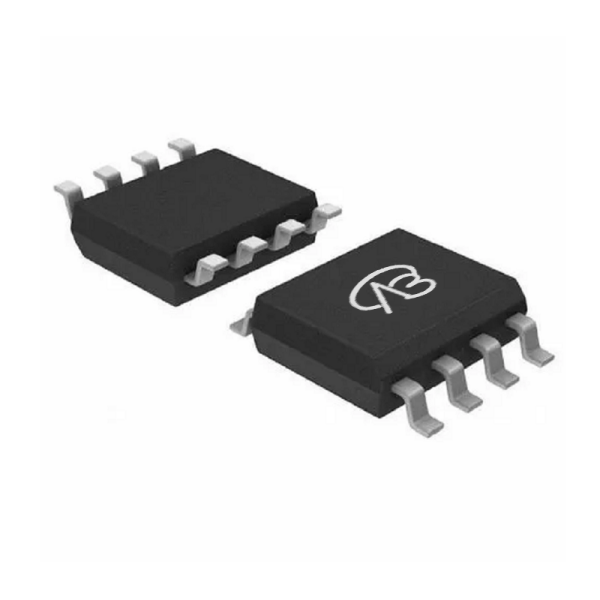
Comparative Analysis: AOSP21321 (P-channel) vs. VBA2311
Analysis of the Original Model (AOSP21321) Core:
This is a 30V P-channel MOSFET from AOS in a compact SOIC-8 package. Its design emphasizes a balance of voltage rating, current capability, and low conduction loss. Key advantages include: a continuous drain current of 11A, and a low on-resistance of 14mΩ at a 10V gate drive. This makes it a reliable choice for various power switching applications requiring moderate current handling.
Compatibility and Differences of the Domestic Alternative (VBA2311):
VBsemi's VBA2311 is a pin-to-pin compatible alternative in an SOP8 package. The main differences are in electrical parameters: VBA2311 offers a similar -30V voltage rating but features a slightly lower continuous current of -11.6A. Its on-resistance is comparable or slightly better at 11mΩ (@10V), potentially offering marginally lower conduction loss.
Key Application Areas:
Original Model AOSP21321: Well-suited for 12V-24V systems requiring efficient power switching with currents around 11A. Typical applications include:
Load switches and power distribution in industrial controls.
DC-DC converter high-side switches.
Motor drive control circuits.
Alternative Model VBA2311: A suitable direct replacement for AOSP21321 in applications where a similar voltage and current profile is needed, with the benefit of potentially slightly improved on-resistance.
Comparative Analysis: AO4405 (P-channel) vs. VBA2333
This comparison focuses on P-channel MOSFETs designed for higher current switching.
Analysis of the Original Model (AO4405) Core:
The AO4405 from AOS, in an SOP-8 package, is designed for applications demanding higher current handling. Its core advantage is a high continuous drain current of 30A at a 30V drain-source voltage. The on-resistance is 70mΩ at 10V gate drive, which is suitable for its target current range.
Compatibility and Differences of the Domestic Alternative (VBA2333):
VBsemi's VBA2333 is a pin-to-pin compatible alternative in SOP8. The key differences are significant: VBA2333 has a much lower continuous drain current rating of -5.8A compared to AO4405's 30A. However, it offers a substantially lower on-resistance of 33mΩ (@10V), indicating superior conduction efficiency for its rated current.
Key Application Areas:
Original Model AO4405: Ideal for applications requiring high-side switching of higher currents (up to 30A) in 12V-24V systems, such as:
High-current load switches in power supplies.
Motor drives for larger brushed DC motors.
Power management in automotive or industrial systems.
Alternative Model VBA2333: Not a direct performance substitute for AO4405 due to its much lower current rating. It is more suitable for applications where the original design uses AO4405 but the actual operating current is well below 5.8A, and where lower on-resistance is desired for improved efficiency within that lower current range. Careful re-evaluation of the current requirements is essential.
Summary
This analysis reveals distinct selection paths:
For AOSP21321 replacements in applications around 11A, the domestic alternative VBA2311 presents a strong, pin-compatible option with similar voltage rating and slightly improved on-resistance.
For AO4405 replacements, the situation requires careful attention. The alternative VBA2333 offers a significantly lower on-resistance but a drastically reduced current capability (5.8A vs. 30A). It is only suitable if the application's actual current demand is very low compared to the original AO4405's rating, prioritizing lower conduction loss over high current capacity.
The core conclusion is that selection must be based on precise requirement matching. Domestic alternatives like VBA2311 provide viable and sometimes enhanced replacements in compatible scenarios, while cases like VBA2333 versus AO4405 highlight the critical importance of verifying current ratings. Understanding each device's parameters ensures optimal performance and reliability in the final design.

Download PDF document
 Download now


