 中文
中文 English
MOSFET Selection for High-Voltage and Low-Voltage Switching: AOI4S60, AOTF260L vs. China Alternatives VBFB165R07S, VBMB1603
Number of views:9999
 Back to previous page
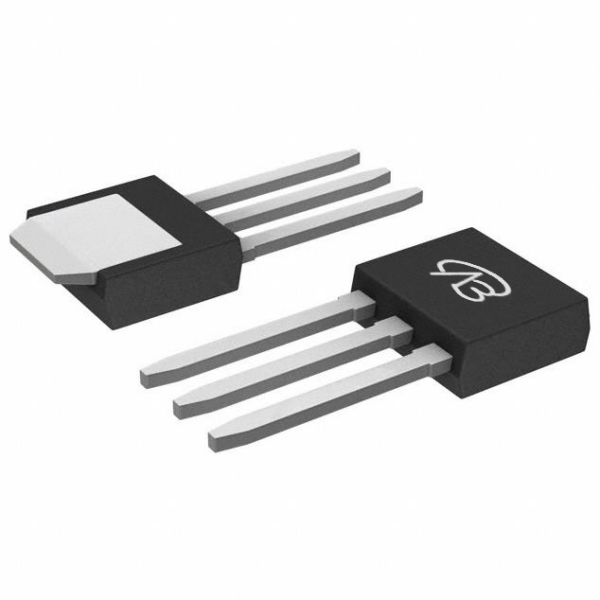
Comparative Analysis: AOI4S60 (High-Voltage N-channel) vs. VBFB165R07S
Analysis of the Original Model (AOI4S60) Core:
This is a 600V N-channel MOSFET from AOS in a TO-251A package. Its design core is to provide robust switching in high-voltage applications. Key advantages are: a high drain-source voltage (Vdss) of 600V, a continuous drain current (Id) of 16A, and an on-resistance (RDS(on)) of 900mΩ at 10V gate drive. This makes it suitable for off-line power supplies and industrial controls where high voltage blocking is essential.
Compatibility and Differences of the Domestic Alternative (VBFB165R07S):
VBsemi's VBFB165R07S is offered in a TO-251 package and serves as a functional alternative. The main differences are in electrical parameters: VBFB165R07S has a slightly lower voltage rating (650V vs. 600V), a lower continuous current (7A vs. 16A), but a significantly improved on-resistance of 700mΩ at 10V. It also features a Super Junction Multi-EPI process.
Key Application Areas:
Original Model AOI4S60: Ideal for high-voltage, medium-current switching. Typical applications include:
Switching power supplies (SMPS) for AC-DC conversion.
Power factor correction (PFC) stages.
Industrial motor drives and inverters requiring 600V rating.
Alternative Model VBFB165R07S: More suitable for high-voltage applications where lower on-resistance is prioritized over very high continuous current, potentially offering efficiency gains in certain SMPS or lighting designs within its 7A current limit.
Comparative Analysis: AOTF260L (Low-Voltage N-channel) vs. VBMB1603
This comparison focuses on low-voltage, high-current applications where minimizing conduction loss is paramount.
Analysis of the Original Model (AOTF260L) Core:
This is a 60V N-channel MOSFET from AOS in a TO-220F package. Its design pursues extremely low on-resistance and high current capability. Core advantages are: a very low RDS(on) of 2.6mΩ at 10V gate drive, a high continuous drain current of 20A, and a standard threshold voltage (Vgs(th)) of 2.2V. The TO-220F package offers good thermal performance for power dissipation.
Compatibility and Differences of the Domestic Alternative (VBMB1603):
VBsemi's VBMB1603, also in a TO-220F package, represents a "performance-enhanced" alternative. It matches the 60V voltage rating but offers dramatically superior parameters: an ultra-low RDS(on) of 2.6mΩ at 10V (matching the original) and an exceptionally high continuous current rating of 210A. It also specifies RDS(on) at 4.5V (5mΩ), useful for lower gate drive applications.
Key Application Areas:
Original Model AOTF260L: Excellent for high-efficiency, medium-to-high current switching in low-voltage systems. Typical applications include:
Synchronous rectification in DC-DC converters (12V/24V/48V bus).
Motor drives for robotics, e-bikes, or tools.
High-current load switches and power distribution.
Alternative Model VBMB1603: Ideal for upgrade scenarios demanding maximum current capability and minimal conduction loss. Its 210A rating and low RDS(on) make it suitable for:
High-power DC-DC converters and VRMs.
Brushed/Brushless DC motor drives requiring very high peak currents.
Server, telecom, and automotive auxiliary power systems.
Summary
This analysis reveals two distinct selection paths:
For high-voltage (600V) switching, the original AOI4S60 provides a solid 16A capability. Its domestic alternative VBFB165R07S offers a lower on-resistance (700mΩ) but at a reduced current rating (7A), making it suitable for efficiency-focused designs within its current range.
For low-voltage, high-current switching, the original AOTF260L is a strong performer with 2.6mΩ and 20A. The domestic alternative VBMB1603 delivers a massive performance boost in current handling (210A) while maintaining the same low RDS(on), making it a compelling upgrade for demanding high-power applications.
The core conclusion is that selection depends on precise requirement matching. Domestic alternatives provide viable backup options and can offer superior performance in specific parameters, giving engineers greater flexibility in design trade-offs and cost control. Understanding each device's design philosophy and parameter implications is key to maximizing its value in the circuit.

Download PDF document
 Download now


