 中文
中文 English
MOSFET Selection for Power and Signal Switching: AOI4185, AO7413 vs. China Alternatives VBFB2412 and VBK2298
Number of views:9999
 Back to previous page
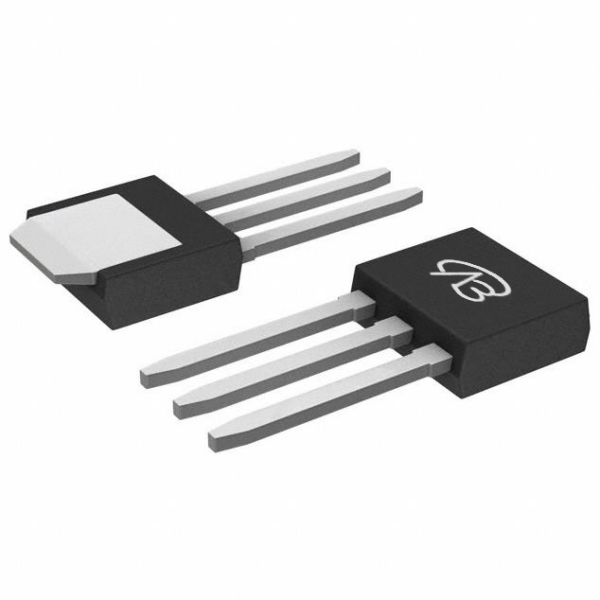
Comparative Analysis: AOI4185 (P-channel) vs. VBFB2412
Analysis of the Original Model (AOI4185) Core:
This is a 40V P-channel MOSFET from AOS in a TO-251A package. Its design core is to deliver robust power handling in a cost-effective through-hole package. Key advantages include: a continuous drain current rating of 40A and a low on-resistance of 15mΩ at 10V gate drive. This combination makes it suitable for applications requiring high current switching with moderate voltage.
Compatibility and Differences of the Domestic Alternative (VBFB2412):
VBsemi's VBFB2412 is also a P-channel MOSFET in a TO-251 package, offering direct pin-to-pin compatibility. The main differences are in electrical parameters: VBFB2412 has a comparable voltage rating (-40V) but offers a significantly higher continuous current rating of -55A. Crucially, it features a lower on-resistance of 10mΩ at 10V, indicating potentially better conduction efficiency and lower power loss.
Key Application Areas:
Original Model AOI4185: Ideal for medium-to-high power switching applications in 12V/24V systems where cost and reliability are key. Typical uses include:
Power switches in automotive systems (e.g., lighting, solenoid control).
DC-DC converter high-side switches.
Motor drives for small appliances or tools.
Alternative Model VBFB2412: Suited for applications demanding higher current capacity and lower conduction loss than the original, such as:
Upgraded power management units.
Higher-current DC-DC converters or load switches.
Systems where enhanced efficiency and thermal performance are needed.
Comparative Analysis: AO7413 (P-channel) vs. VBK2298
This comparison shifts focus to small-signal applications where space and efficiency at low currents are paramount.
Analysis of the Original Model (AO7413) Core:
The AO7413 from AOS is a 20V P-channel MOSFET in an ultra-compact SC-70-3 package. Its design pursues space-saving and functional efficiency for signal-level switching. Key features are a continuous current of 1.4A and an on-resistance of 113mΩ at 10V gate drive, making it suitable for low-power control circuits.
Compatibility and Differences of the Domestic Alternative (VBK2298):
VBsemi's VBK2298 is a direct pin-to-pin compatible alternative in the same SC70-3 package. It matches the voltage rating (-20V) but offers a higher continuous current rating of -3.1A. More importantly, it provides a significantly lower on-resistance of 80mΩ at 4.5V gate drive, which translates to better performance in battery-operated or low-voltage drive scenarios.
Key Application Areas:
Original Model AO7413: Perfect for space-constrained, low-current signal switching and power management. Typical applications include:
Load switching for peripherals in portable devices (IoT sensors, wearables).
Power gating for microcontrollers or memory modules.
Signal isolation or level shifting in communication interfaces.
Alternative Model VBK2298: Better suited for applications requiring higher current handling within the same tiny footprint or where lower gate drive voltage (e.g., 2.5V/4.5V) is available. Examples are:
Enhanced load switches in compact battery-powered devices.
Circuits where lower RDS(on) improves overall system efficiency at low voltages.
Conclusion
In summary, this analysis reveals two distinct selection paths:
For power-level P-channel switching, the original AOI4185 offers a reliable, cost-effective solution for currents up to 40A. Its domestic alternative VBFB2412 provides a performance-enhanced option with higher current (55A) and lower on-resistance (10mΩ), making it ideal for upgrade scenarios demanding higher efficiency and power density.
For signal-level P-channel switching, the original AO7413 is a proven choice for ultra-compact, low-current control. Its domestic alternative VBK2298 offers a compelling upgrade with higher current capability (3.1A) and superior on-resistance (80mΩ @4.5V), especially beneficial for modern low-voltage digital systems.
The core takeaway is that selection depends on precise requirement matching. Domestic alternatives not only provide viable backups but also offer performance advantages in key parameters, giving engineers greater flexibility and resilience in design trade-offs and cost optimization. Understanding each device's design philosophy and parameter implications is essential to unlocking its full potential in your circuit.

Download PDF document
 Download now


