 中文
中文 English
MOSFET Selection for Power Switching Solutions: AOD2910, AON4803 vs. China Alternatives VBE1102N, VBBD4290
Number of views:9999
 Back to previous page
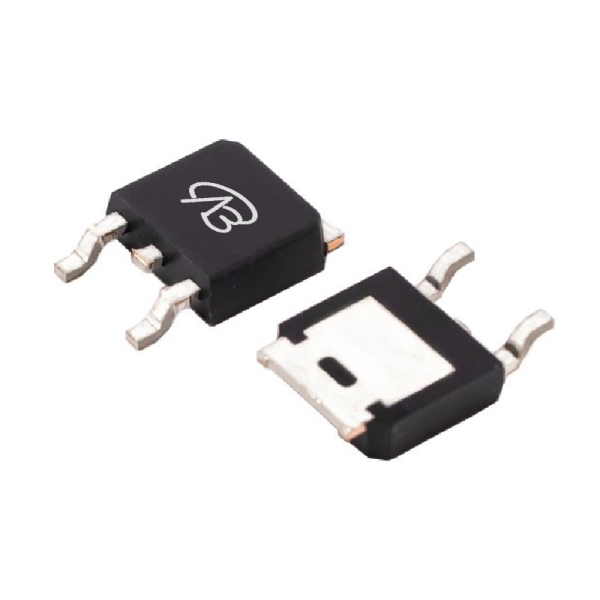
Comparative Analysis: AOD2910 (N-channel) vs. VBE1102N
Analysis of the Original Model (AOD2910) Core:
This is a 100V N-channel MOSFET from AOS in a TO-252 package. Its design core leverages unique trench MOSFET technology optimized for high-frequency switching efficiency. Key advantages include a low on-resistance of 24mΩ at 10V gate drive, a continuous drain current of 31A, and minimized conduction and switching losses due to an excellent combination of low RDS(ON), Ciss, and Coss.
Compatibility and Differences of the Domestic Alternative (VBE1102N):
VBsemi’s VBE1102N is a pin-to-pin compatible alternative in the same TO-252 package. It offers enhanced key parameters: the same 100V voltage rating but a higher continuous current of 45A and a lower on-resistance of 18mΩ at 10V.
Key Application Areas:
Original Model AOD2910: Ideal for high-frequency switching applications requiring efficient performance in consumer, telecom, industrial power, and LED backlighting. Typical uses include boost converters and synchronous rectifiers.
Alternative Model VBE1102N: Suited for upgraded scenarios demanding higher current capability and lower conduction loss, such as higher-power boost converters, synchronous rectification, or motor drives within the same voltage range.
Comparative Analysis: AON4803 (P-channel) vs. VBBD4290
This P-channel MOSFET focuses on efficient power management in compact spaces.
Analysis of the Original Model (AON4803) Core:
This 20V P-channel MOSFET from AOS uses a space-saving DFN-8 (2x3) package. Its design emphasizes operation at low gate drive voltages, featuring an on-resistance of 165mΩ at 1.8V (1.5A) and a low threshold voltage (Vgs(th)) of 1V at 250µA. It supports a continuous drain current of -15A.
Compatibility and Differences of the Domestic Alternative (VBBD4290):
VBsemi’s VBBD4290 is a compatible alternative in a DFN8(3x2)-B package. Key differences include a slightly higher on-resistance of 100mΩ at 4.5V (83mΩ at 10V) and a lower continuous drain current of -4A, but it maintains a similar voltage rating (-20V) and low threshold voltage (-0.8V).
Key Application Areas:
Original Model AON4803: Excellent for space-constrained, low-voltage applications requiring moderate current switching, such as load switches, power path management in battery-powered devices, or as a high-side switch in low-voltage DC-DC converters.
Alternative Model VBBD4290: A viable option for P-channel applications where package compatibility is critical and the current demand is within 4A, suitable for compact power management circuits with similar voltage requirements.
Conclusion:
This analysis reveals two distinct selection paths:
For N-channel applications prioritizing high-frequency efficiency and current handling around 30A at 100V, the original AOD2910 offers a proven balance. Its domestic alternative VBE1102N provides a performance-enhanced option with higher current (45A) and lower on-resistance (18mΩ), ideal for upgrades demanding higher power density.
For P-channel applications in compact, low-voltage designs needing currents up to 15A, the AON4803 is a strong candidate. The domestic alternative VBBD4290 serves as a package-compatible solution for scenarios where the current requirement is lower (around 4A).
The core takeaway is precise requirement matching. Domestic alternatives not only offer supply chain resilience but also provide opportunities for performance enhancement or cost-effective substitution, giving engineers greater flexibility in design trade-offs.

Download PDF document
 Download now


