 中文
中文 English
MOSFET Selection for Power Management: AO8822, AO4294 vs. China Alternatives VBC6N2022, VBA1101N
Number of views:9999
 Back to previous page
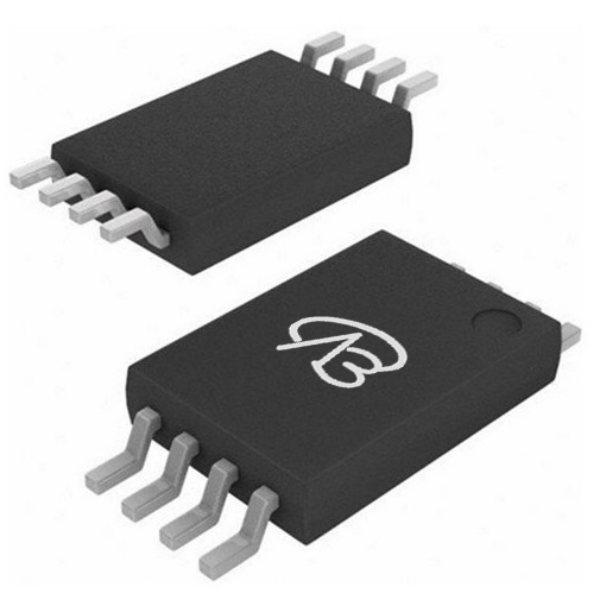
Comparative Analysis: AO8822 (Dual N-Channel) vs. VBC6N2022
Analysis of the Original Model (AO8822) Core:
This is a 20V dual N-channel MOSFET from AOS in a TSSOP-8 package. Its design focuses on providing balanced switching performance in a compact footprint. Key advantages include: low on-resistance of 18mΩ at 10V gate drive, threshold voltage of 1V for easy low-voltage drive, and dual N-channel integration ideal for space-constrained synchronous rectification or load switching circuits.
Compatibility and Differences of the Domestic Alternative (VBC6N2022):
VBsemi’s VBC6N2022 is a pin-to-pin compatible alternative in TSSOP-8 package with a common-drain N+N configuration. Main parameter differences: similar voltage rating (20V) and gate threshold range (0.5–1.5V), but higher on-resistance—32mΩ at 2.5V and 22mΩ at 4.5V—and lower continuous current rating (6.6A) compared to AO8822.
Key Application Areas:
- Original Model AO8822: Suitable for low-voltage, high-efficiency dual-switch applications such as:
- Synchronous rectification in DC-DC converters (e.g., step-down regulators).
- Load switching in portable devices, USB power distribution.
- Motor drive circuits in compact consumer electronics.
- Alternative Model VBC6N2022: Best for cost-sensitive designs where dual N-channel integration is needed but current demands are moderate (below 7A), especially in battery-powered systems or low-power switching.
Comparative Analysis: AO4294 (High-Voltage N-Channel) vs. VBA1101N
This comparison highlights the trade-off between high-voltage capability and conduction performance.
Original Model (AO4294) Core Advantages:
- High voltage rating (100V) with robust on-resistance of 21mΩ at 10V.
- Continuous current up to 11.5A, suitable for medium-power off-line or bus applications.
- Moderate switching characteristics (Qg 50nC) and threshold voltage of 2.4V.
- SOIC-8 package offers good thermal performance for power dissipation.
Domestic Alternative (VBA1101N) Performance Enhancement:
VBA1101N provides significant improvement in key parameters: same 100V rating, but lower on-resistance of 9mΩ at 10V and higher continuous current of 16A. This enables lower conduction losses and higher power handling in similar SOIC-8 footprint.
Key Application Areas:
- Original Model AO4294: Ideal for 48–100V systems requiring reliable high-voltage switching:
- Power over Ethernet (PoE) applications.
- Telecom and industrial power supplies.
- Motor drives and inverter circuits.
- Alternative Model VBA1101N: Suited for upgraded designs demanding higher efficiency and current capacity, such as:
- High-current DC-DC converters in server/communication equipment.
- Enhanced motor drives or power tools.
- High-density power modules where lower RDS(on) reduces thermal stress.
Conclusion:
This analysis reveals two distinct selection paths:
- For dual N-channel applications in low-voltage systems, AO8822 offers an excellent balance of low RDS(on), dual integration, and compact packaging. Its domestic alternative VBC6N2022 provides a compatible, cost-effective option for designs with moderate current requirements.
- For high-voltage N-channel applications, AO4294 delivers reliable 100V performance with good efficiency. The alternative VBA1101N significantly outperforms in conduction loss and current capability, enabling higher power density and thermal margins.
The core insight: selection depends on precise requirement matching. Domestic alternatives like VBC6N2022 and VBA1101N not only offer supply chain resilience but also provide competitive or enhanced parameters, giving engineers flexible options for design optimization and cost control. Understanding each device’s design focus ensures maximum value in your circuit.

Download PDF document
 Download now


