 中文
中文 English
MOSFET Selection for Low-Power Switching and High-Voltage Applications: AO7405, AOT1N60 vs. China Alternatives VBK8238, VBM165R02
Number of views:9999
 Back to previous page
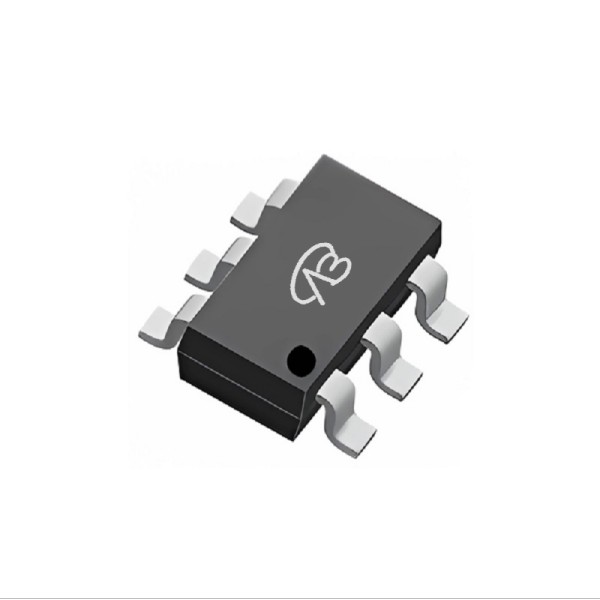
Comparative Analysis: AO7405 (P-channel) vs. VBK8238
Analysis of the Original Model (AO7405) Core:
The AO7405 from AOS is a 30V P-channel MOSFET in an ultra-small SC-70-6 package. Its design focuses on providing reliable low-power switching in minimal space. Key advantages include a drain-source voltage (Vdss) of -30V, a continuous drain current (Id) of -1.6A, and an on-resistance (RDS(on)) of 150mΩ at 10V gate drive. With a threshold voltage (Vgs(th)) of -1.4V, it is suitable for low-voltage drive circuits.
Compatibility and Differences of the Domestic Alternative (VBK8238):
VBsemi’s VBK8238 is a pin-to-pin compatible alternative in the same SC70-6 package. The main differences are in electrical parameters: VBK8238 has a slightly lower voltage rating (-20V) but offers significantly better conduction performance. Its on-resistance is dramatically lower at 34mΩ (@4.5V) compared to the AO7405's 150mΩ (@10V), and it supports a higher continuous current of -4A.
Key Application Areas:
Original Model AO7405: Ideal for space-constrained, low-current applications such as signal switching, load switching in portable devices, or power management in battery-operated electronics where 30V rating and a standard threshold voltage are required.
Alternative Model VBK8238: Better suited for applications where lower on-resistance and higher current capability are prioritized over the highest voltage rating. Its superior conduction loss makes it excellent for efficient power path management in low-voltage systems (within 20V) requiring up to 4A.
Comparative Analysis: AOT1N60 (N-channel) vs. VBM165R02
This comparison shifts to high-voltage, low-current applications. The AOT1N60 is designed for scenarios requiring high voltage blocking capability.
Analysis of the Original Model (AOT1N60) Core:
The AOT1N60 from AOS is a 600V N-channel MOSFET in a TO-220 package. Its core advantage is high voltage withstand (Vdss=600V) for off-line or high-voltage switching. It features a continuous drain current (Id) of 1.3A and an on-resistance (RDS(on)) of 9Ω at 10V gate drive and 650mA.
Compatibility and Differences of the Domestic Alternative (VBM165R02):
VBsemi’s VBM165R02, also in a TO-220 package, offers a comparable high-voltage rating (650V) but with enhanced current handling. Its continuous drain current is 2A, and it features a significantly lower on-resistance of 3.12Ω (@10V) compared to the AOT1N60's 9Ω.
Key Application Areas:
Original Model AOT1N60: Suitable for high-voltage, low-current switching applications such as offline switchers for low-power adapters, auxiliary power supplies, or snubber circuits where 600V rating and standard current are sufficient.
Alternative Model VBM165R02: A performance-enhanced choice for similar high-voltage applications but where lower conduction loss and higher current margin (2A) are beneficial. It is ideal for upgraded designs in switch-mode power supplies (SMPS) or lighting ballasts requiring better efficiency.
Conclusion:
This analysis reveals two distinct selection paths:
For low-power P-channel switching, the AO7405 offers a compact 30V solution for standard low-current needs. Its domestic alternative, VBK8238, trades some voltage rating for vastly superior on-resistance (34mΩ vs. 150mΩ) and higher current (-4A vs. -1.6A), making it a compelling upgrade for efficiency-critical designs within 20V systems.
For high-voltage N-channel switching, the AOT1N60 provides a reliable 600V, 1.3A option. The domestic alternative VBM165R02 matches the high-voltage need (650V) while offering a lower on-resistance (3.12Ω vs. 9Ω) and higher current (2A vs. 1.3A), presenting a clear performance advantage for enhanced efficiency and power handling.
The core takeaway is that selection depends on precise requirement matching. Domestic alternatives not only provide supply chain resilience but can also offer significant performance improvements in key parameters like on-resistance and current capability, giving engineers valuable flexibility in design optimization and cost management. Understanding each device's parameter implications is essential to leverage its full potential in the circuit.

Download PDF document
 Download now


