 中文
中文 English
MOSFET Selection for Compact Power Applications: AO4840, AOD2606 vs. China Alternatives VBA3638, VBE1615
Number of views:9999
 Back to previous page
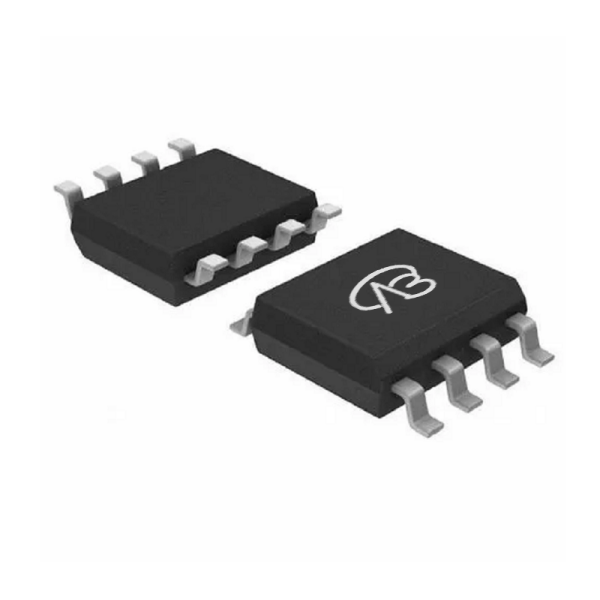
Comparative Analysis: AO4840 (Dual N-channel) vs. VBA3638
Analysis of the Original Model (AO4840) Core:
This is a 40V dual N-channel MOSFET from AOS in a standard SOIC-8 package. Its design core is to provide a compact, dual-switch solution for space-conscious designs. Key advantages include: a drain current of 6A per channel and an on-resistance (RDS(on)) of 36mΩ at 10V gate drive. The dual N-channel configuration in one package saves significant board space in circuits requiring complementary or synchronous switching.
Compatibility and Differences of the Domestic Alternative (VBA3638):
VBsemi's VBA3638 is also offered in an SOP8 package and serves as a pin-to-pin compatible alternative. The main differences are in the electrical parameters: VBA3638 features a higher voltage rating (60V vs. 40V) and offers a slightly lower on-resistance of 28mΩ at 10V. However, its continuous drain current rating per channel is comparable at 7A.
Key Application Areas:
Original Model AO4840: Its characteristics make it well-suited for space-constrained 12V/24V systems requiring dual low-side switches or synchronous rectification in lower-power DC-DC converters. Typical applications include:
Power management in consumer electronics (e.g., laptops, set-top boxes).
Low-side switching in motor control circuits for small fans or actuators.
Synchronous rectification in compact DC-DC buck converters.
Alternative Model VBA3638: More suitable for applications requiring a higher voltage safety margin (up to 60V systems) while maintaining similar or slightly improved conduction performance. It's a robust drop-in replacement, especially where supply chain diversification is needed.
Comparative Analysis: AOD2606 (N-channel) vs. VBE1615
This comparison shifts focus to a higher-power, single N-channel MOSFET in a DPAK package, where the design pursuit is an optimal balance of 'low resistance and high current capability'.
Analysis of the Original Model (AOD2606) Core:
The core advantages of the AOD2606 from AOS are evident in its DPAK package:
Robust Current Handling: It supports a continuous drain current (Id) of 14A and a pulsed current up to 46A.
Low Conduction Loss: Features a low on-resistance of 6.8mΩ at 10V gate drive and 20A, minimizing power loss in the on-state.
Proven Package: The TO-252 (DPAK) package offers a good balance between power handling, thermal performance, and board space.
Compatibility and Differences of the Domestic Alternative (VBE1615):
The domestic alternative VBE1615 represents a significant 'performance-enhanced' choice. It achieves substantial improvements in key parameters: while maintaining the same 60V voltage rating, it boasts a dramatically higher continuous current of 58A and a significantly lower on-resistance of 10mΩ at 10V (and 13mΩ at 4.5V). This translates to potentially lower temperature rise and higher efficiency in demanding applications.
Key Application Areas:
Original Model AOD2606: Its combination of 60V rating, 14A continuous current, and low RDS(on) makes it an excellent choice for medium-to-high-power applications. For example:
DC-DC converter switching (buck, boost) in 12V/24V/48V systems.
Motor drives for power tools, e-bikes, or industrial controls.
Power switches in automotive and industrial systems.
Alternative Model VBE1615: Is ideally suited for upgraded scenarios demanding much higher current capability and lower conduction losses. It's an excellent choice for next-generation designs in high-current DC-DC converters, high-power motor drives, or as a more robust replacement in existing AOD2606 applications to improve efficiency and thermal performance.
Conclusion
In summary, this comparative analysis reveals two clear selection paths:
For dual N-channel applications in standard packages like SOIC-8, the original model AO4840 provides a reliable, space-saving solution for lower-power dual-switch needs. Its domestic alternative VBA3638 offers a compatible package with a higher voltage rating and slightly better on-resistance, serving as a viable and potentially upgraded alternative, especially for 60V system considerations.
For single N-channel, higher-power applications in packages like DPAK, the original model AOD2606 offers a solid balance of voltage, current, and resistance for many medium-power scenarios. Its domestic alternative VBE1615 provides a substantial 'performance leap' with vastly higher current rating and lower on-resistance, making it a compelling choice for new designs or upgrades where maximizing efficiency and power density is critical.
The core conclusion is: Selection hinges on precise requirement matching. In the context of supply chain diversification, domestic alternatives like VBA3638 and VBE1615 not only provide feasible backup options but also offer parameter enhancements in key areas, giving engineers more flexible and resilient choices for design trade-offs and cost control. Understanding each device's design philosophy and parameter implications is key to maximizing its value in your circuit.

Download PDF document
 Download now


