 中文
中文 English
MOSFET Selection for Power Designs: AO4838, AOT412 vs. China Alternatives VBA3310, VBM1101N
Number of views:9999
 Back to previous page
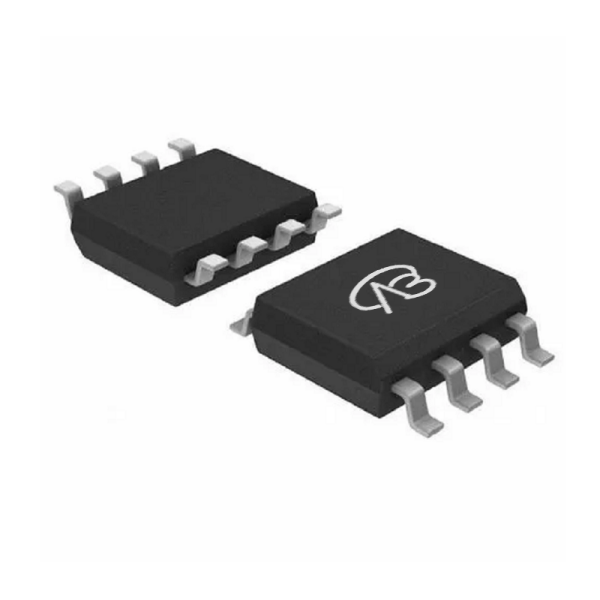
Comparative Analysis: AO4838 (Dual N-Channel) vs. VBA3310
Analysis of the Original Model (AO4838) Core:
This is a 30V dual N-channel MOSFET from AOS in a compact SOIC-8 package. Its design core is to provide efficient, space-saving switching for multi-channel circuits. Key advantages include: a low on-resistance of 9.6mΩ per channel at 10V gate drive, and a continuous drain current rating of 11A per channel. The dual-die integration in a standard package simplifies layout for synchronous rectification or load switching.
Compatibility and Differences of the Domestic Alternative (VBA3310):
VBsemi's VBA3310 is a direct pin-to-pin compatible dual N-channel MOSFET in an SOP8 package. The key parameter comparison shows: both share a 30V drain-source voltage rating. The VBA3310 offers a slightly higher continuous current rating of 13.5A per channel. Its on-resistance is comparable, rated at 10mΩ @10V. This makes it a strong functional and electrical equivalent.
Key Application Areas:
Original Model AO4838: Ideal for space-constrained, multi-switch applications in 12V-24V systems requiring good efficiency.
Synchronous Rectification in DC-DC Converters: As low-side switches in buck or boost converters.
Load Switching & Power Distribution: In motherboards, networking equipment, or industrial controls.
Motor Drive H-Bridges: For driving small brushed DC or stepper motors.
Alternative Model VBA3310: Suits the same application spaces as the AO4838, offering a reliable domestic alternative with equivalent or slightly enhanced current capability for designs seeking supply chain diversification.
Comparative Analysis: AOT412 (High-Power N-Channel) vs. VBM1101N
This comparison shifts to high-current, high-voltage single-switch applications, where the design pursuit is "high power handling with low conduction loss."
Analysis of the Original Model (AOT412) Core:
This 100V N-channel MOSFET from AOS in a TO-220 package is built for robust power switching. Its core advantages are:
High Power Capability: Withstands 100V and a continuous drain current of 60A.
Low Conduction Loss: Features an on-resistance of 15.8mΩ @10V, minimizing power dissipation in the on-state.
Proven Package: The TO-220 package offers excellent thermal performance for manageable heat dissipation in high-current paths.
Compatibility and Differences of the Domestic Alternative (VBM1101N):
VBsemi's VBM1101N is a pin-to-pin compatible alternative in a TO-220 package, presenting a "performance-enhanced" profile:
It matches the 100V voltage rating.
It significantly surpasses the original in current capability, rated for a continuous drain current of 100A.
It offers a lower on-resistance of 9mΩ @10V, promising reduced conduction losses and lower operating temperatures.
Key Application Areas:
Original Model AOT412: An excellent choice for high-current switching in industrial, automotive, and power supply applications.
High-Current DC-DC Converters: In server PSUs, telecom rectifiers, or welding equipment.
Motor Drives: For driving large brushed DC motors, actuators, or as switches in inverter bridges.
Solid-State Relays & Power Switching: In battery management systems (BMS) or power distribution units.
Alternative Model VBM1101N: Excels in upgrade scenarios demanding even higher current capacity and lower losses. It is suitable for the next generation of high-density power supplies, high-torque motor drives, or any application where maximizing efficiency and current headroom is critical.
Conclusion
This analysis outlines two clear substitution paths:
For dual N-channel applications in compact footprints, the original AO4838 and its domestic alternative VBA3310 are highly comparable. The VBA3310 offers a viable, performance-equivalent replacement, facilitating design continuity and supply chain resilience.
For high-power single N-channel applications, the original AOT412 is a robust performer. However, the domestic alternative VBM1101N emerges as a compelling "performance-upgraded" option, delivering significantly higher current rating (100A vs. 60A) and lower on-resistance (9mΩ vs. 15.8mΩ). This makes it an ideal choice for new designs pushing power density limits or for upgrading existing systems for higher efficiency and load capacity.
The core takeaway is that selection is driven by precise requirement matching. Domestic alternatives like VBA3310 and VBM1101N not only provide reliable backup options but also offer opportunities for performance gains, giving engineers greater flexibility in design optimization and cost management.

Download PDF document
 Download now


