 中文
中文 English
MOSFET Selection for Compact Dual-Channel and High-Efficiency Solutions: AO4616L, AONR32320C vs. China Alternatives VBA5325, VBQF1320
Number of views:9999
 Back to previous page
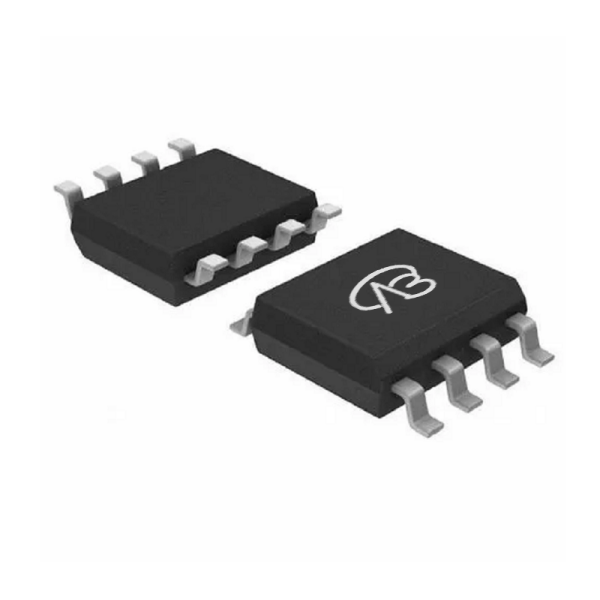
Comparative Analysis: AO4616L (Dual N+P Channel) vs. VBA5325
Analysis of the Original Model (AO4616L) Core:
This is a dual MOSFET from AOS in a standard SOP-8 package, integrating one 30V N-channel and one -30V P-channel. Its design core is to provide a compact, space-saving solution for circuits requiring complementary switching, such as half-bridge or motor drive interfaces. Key advantages include: a balanced performance with on-resistance of 28mΩ (N) and 28mΩ (P) at 4.5V gate drive, and a continuous current rating of 6A per channel. The standard threshold voltage (1.2V~1.4V) ensures good compatibility with common logic levels.
Compatibility and Differences of the Domestic Alternative (VBA5325):
VBsemi's VBA5325 is a direct pin-to-pin compatible alternative in an SOP-8 package. The main differences and improvements lie in the electrical parameters: VBA5325 offers a higher voltage rating for the P-channel (±30V vs. -30V for AO4616L's P-channel) and generally lower on-resistance. Specifically, its N-channel RDS(on) is 24mΩ @4.5V and 18mΩ @10V, while the P-channel RDS(on) is 50mΩ @4.5V and 40mΩ @10V. The continuous current rating is also higher at ±8A per channel.
Key Application Areas:
Original Model AO4616L: Ideal for space-constrained applications requiring a complementary pair with moderate current handling. Typical uses include:
Load switching and polarity protection in portable devices.
Simple half-bridge circuits for motor control in small appliances or fans.
Power management interfaces in consumer electronics.
Alternative Model VBA5325: More suitable for applications requiring enhanced performance from a dual MOSFET. Its lower on-resistance and higher current capability make it a strong candidate for:
Upgraded motor drive circuits demanding lower conduction losses.
More efficient DC-DC converter synchronous stages using a complementary pair.
General-purpose switching where improved thermal performance is needed.
Comparative Analysis: AONR32320C (N-channel) vs. VBQF1320
This comparison focuses on a high-efficiency, single N-channel MOSFET in a compact DFN package. The design pursuit here is maximizing performance within a minimal footprint.
Analysis of the Original Model (AONR32320C) Core:
This 30V N-channel MOSFET from AOS uses a thermally enhanced DFN-8 (3x3mm) package. Its core advantages are:
Good Efficiency in Small Size: With an on-resistance of 17mΩ at a 12V gate drive, it supports a continuous drain current of 12A (or 9.5A under certain conditions), offering a solid performance-to-size ratio.
Thermal Performance: The DFN-8 package provides a good thermal path for heat dissipation in compact designs.
Compatibility and Differences of the Domestic Alternative (VBQF1320):
VBsemi's VBQF1320 is a direct package-compatible alternative in DFN-8 (3x3). It represents a significant performance enhancement:
It matches the 30V voltage rating.
It features a lower on-resistance: 25mΩ @4.5V and 21mΩ @10V, indicating good performance even at lower gate drives.
It boasts a substantially higher continuous drain current rating of 18A.
Key Application Areas:
Original Model AONR32320C: Suited for applications where board space is premium and a robust single N-channel switch is needed. Examples include:
Load switches and power distribution in notebooks, tablets, and networking equipment.
Synchronous rectification in mid-current point-of-load (POL) converters.
Battery protection circuits and management systems.
Alternative Model VBQF1320: Ideal for upgrade or new designs requiring higher current capability and lower conduction losses in the same compact footprint. Its enhanced specs make it suitable for:
Higher-current DC-DC converters (buck, boost).
Motor drives for more powerful small motors.
Any application where the AONR32320C is used but higher efficiency or power handling is desired.
Summary and Selection Paths:
This analysis reveals two distinct selection strategies:
1. For integrated dual N+P channel needs, the original AO4616L provides a proven, balanced solution in a standard package for moderate-current applications. Its domestic alternative VBA5325 offers a compelling upgrade path with lower on-resistance, higher current ratings, and a wider P-channel voltage range, making it an excellent choice for performance-enhanced designs without changing the footprint.
2. For high-efficiency single N-channel switching in ultra-compact spaces, the original AONR32320C delivers reliable performance. However, the domestic alternative VBQF1320 stands out as a superior performance option, offering significantly higher current capacity (18A vs. 12A) and competitive low on-resistance, enabling higher power density and efficiency in the same DFN-8 (3x3) package.
Core Conclusion: The choice is not about absolute superiority but about precise requirement matching. In the context of supply chain diversification, domestic alternatives like VBA5325 and VBQF1320 not only provide reliable backup options but also demonstrate meaningful performance enhancements in key parameters. They offer engineers greater flexibility, resilience, and potential for design optimization in terms of efficiency, thermal management, and cost control. Understanding the design philosophy and parameter implications of each device is essential to unlock its full potential in your circuit.

Download PDF document
 Download now


