 中文
中文 English
MOSFET Selection for Power Management: AO4498, AOSP21311C vs. China Alternatives VBA1303, VBA2333
Number of views:9999
 Back to previous page
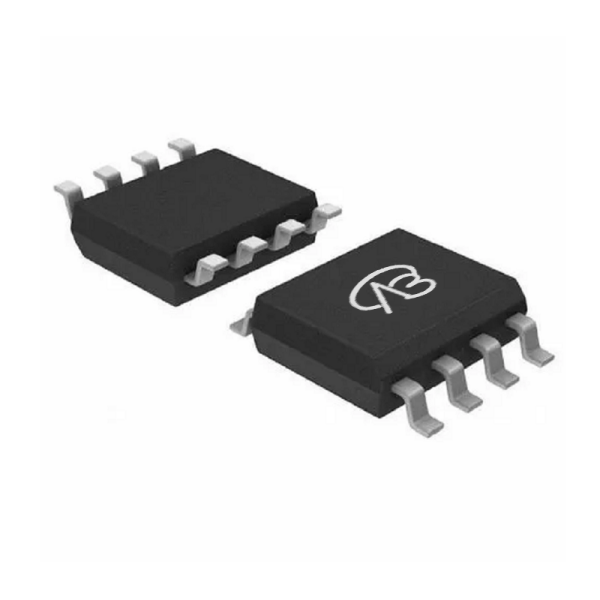
Comparative Analysis: AO4498 (N-channel) vs. VBA1303
Analysis of the Original Model (AO4498) Core:
This is a 30V N-channel MOSFET from AOS in SOIC-8 package. Its design emphasizes efficient power handling with low conduction loss. Key advantages: continuous drain current up to 18A, and low on-resistance of 5.5mΩ at 10V gate drive. This ensures minimal power dissipation in high-current applications.
Compatibility and Differences of the Domestic Alternative (VBA1303):
VBsemi’s VBA1303 is a pin-to-pin compatible alternative in SOP8 package. It matches the voltage rating (30V) and current rating (18A), while offering improved on-resistance: 4mΩ at 10V, lower than the original’s 5.5mΩ. This enhancement reduces conduction losses further.
Key Application Areas:
- Original Model AO4498: Ideal for medium-power switching where low RDS(on) and 18A current capability are critical. Typical uses include:
- DC-DC synchronous rectification in 12V/24V systems.
- Motor drives for small to medium brushed DC motors.
- Power management modules in computing or communication equipment.
- Alternative Model VBA1303: Suits the same applications but provides better efficiency due to lower on-resistance, making it a performance-upgrade choice for designs seeking reduced losses.
Comparative Analysis: AOSP21311C (P-channel) vs. VBA2333
Analysis of the Original Model (AOSP21311C) Core:
This 30V P-channel MOSFET from AOS in SOIC-8 package targets space-constrained designs requiring high-side switching. It offers a continuous current of 6A with an on-resistance of 42mΩ at 10V, balancing compactness and adequate power handling.
Compatibility and Differences of the Domestic Alternative (VBA2333):
VBsemi’s VBA2333 is a direct pin-to-pin alternative in SOP8. It matches the -30V voltage rating and offers a similar continuous current (-5.8A). Its on-resistance is 33mΩ at 10V, significantly lower than the original’s 42mΩ, improving efficiency in conduction.
Key Application Areas:
- Original Model AOSP21311C: Fits applications needing compact P-channel solutions with moderate current, such as:
- Load switches in portable devices or IoT modules.
- Power path management in battery-operated systems (e.g., single-cell Li-ion).
- High-side switching in DC-DC converters.
- Alternative Model VBA2333: Better suited for scenarios where lower on-resistance is prioritized, enhancing thermal performance and efficiency in similar voltage and current ranges.
Conclusion:
This comparison highlights two selection paths:
- For N-channel applications, AO4498 provides reliable 18A capability with 5.5mΩ RDS(on), while VBA1303 offers a compatible alternative with superior 4mΩ RDS(on) for higher efficiency.
- For P-channel applications, AOSP21311C delivers compact 6A switching, and VBA2333 improves upon it with 33mΩ RDS(on) versus 42mΩ, reducing losses.
The core insight: Selection depends on precise requirement matching. Domestic alternatives like VBA1303 and VBA2333 not only ensure supply chain resilience but also offer parameter enhancements, giving engineers flexible, cost-effective options. Understanding each device’s design intent and specs is essential to maximize circuit performance.

Download PDF document
 Download now


