 中文
中文 English
MOSFET Selection for Power Switching Solutions: AO4449, AOB288L vs. China Alternatives VBA2333, VBL1806
Number of views:9999
 Back to previous page
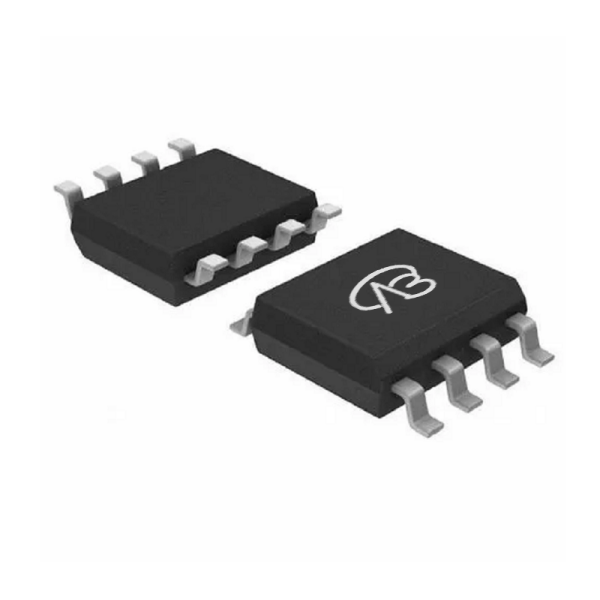
Comparative Analysis: AO4449 (P‑channel) vs. VBA2333
Original Part (AO4449) Core Analysis:
This is a 30V P‑channel MOSFET from AOS in a compact SOIC‑8 package. It is designed for efficient power switching in space‑conscious applications. Key advantages include a continuous drain current of 7A and a low on‑resistance of 34mΩ at 10V gate drive, offering a good balance of current capability and conduction loss.
Domestic Alternative (VBA2333) Compatibility and Differences:
VBsemi’s VBA2333 is a pin‑to‑pin compatible alternative in SOP8 package. Electrically, it matches the voltage rating (-30V) and shows a similar on‑resistance of 33mΩ at 10V. However, its continuous current rating is slightly lower at -5.8A.
Key Application Areas:
- AO4449: Ideal for 12V–24V systems requiring moderate current switching, such as load switches, power management in consumer electronics, or low‑side switching in DC‑DC converters.
- VBA2333: Suitable for applications where voltage rating and on‑resistance are critical, but current demand stays below 6A, offering a reliable alternative with good parametric alignment.
Comparative Analysis: AOB288L (N‑channel) vs. VBL1806
Original Part (AOB288L) Core Analysis:
This 80V N‑channel MOSFET from AOS comes in a TO‑263 (D2PAK) package, targeting medium‑power applications. It delivers a continuous current of 10.5A (up to 46A under pulsed conditions) and a low on‑resistance of 8.9mΩ at 10V, ensuring efficient power handling and minimal conduction loss.
Domestic Alternative (VBL1806) Compatibility and Differences:
VBsemi’s VBL1806 is a direct substitute in TO‑263 package. It not only matches the 80V voltage rating but significantly outperforms the original in key specs: continuous current reaches 120A, and on‑resistance is as low as 6mΩ at 10V, offering enhanced current capability and lower conduction losses.
Key Application Areas:
- AOB288L: Well‑suited for 48V–80V systems such as motor drives, DC‑DC converters, and power supplies where robust voltage rating and moderate current are required.
- VBL1806: An excellent upgrade choice for high‑current applications like high‑power motor drives, server power systems, or industrial converters, where lower on‑resistance and higher current capacity are critical.
Conclusion
This comparison highlights two distinct selection paths:
For P‑channel applications in standard packages, the original AO4449 provides a proven solution with 7A current and 34mΩ on‑resistance, while its domestic alternative VBA2333 offers a compatible, cost‑effective option with slightly reduced current rating.
For N‑channel designs requiring higher power, the original AOB288L delivers reliable 80V/10.5A performance, whereas the domestic alternative VBL1806 stands out as a performance‑enhanced substitute with dramatically higher current (120A) and lower on‑resistance (6mΩ), ideal for demanding high‑current upgrades.
The core insight is that selection depends on precise requirement matching. Domestic alternatives not only provide supply‑chain resilience but also offer parametric improvements, giving engineers greater flexibility in design trade‑offs and cost optimization. Understanding each device’s design intent and parameter implications is key to maximizing circuit performance.

Download PDF document
 Download now


