 中文
中文 English
MOSFET Selection for Compact Power Applications: AO3480, AOSS32136C vs. China Alternatives VBB1328, VB1240
Number of views:9999
 Back to previous page
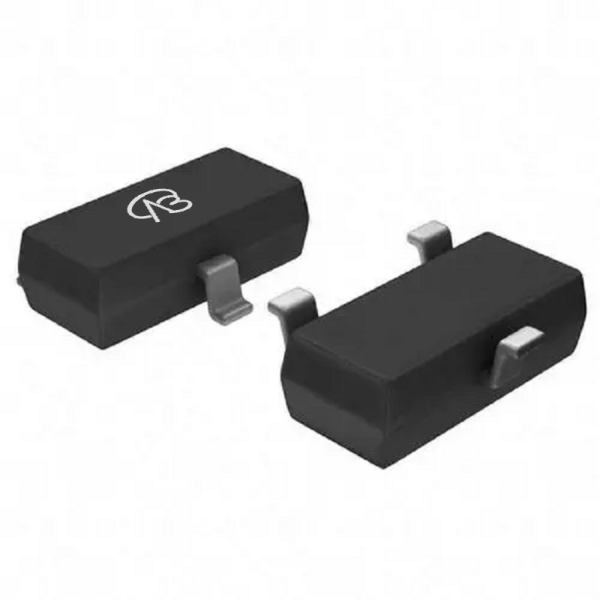
Comparative Analysis: AO3480 (N-channel) vs. VBB1328
Analysis of the Original Model (AO3480) Core:
This is a 30V N-channel MOSFET from AOS, using the compact and ubiquitous SOT-23 package. Its design core is to provide a robust balance of voltage rating and current capability in a minimal footprint. Key advantages include: a drain-source voltage (Vdss) of 30V, a continuous drain current (Id) of 5.7A, and an on-resistance (RDS(on)) of 26.5mΩ at a 10V gate drive. Its threshold voltage (Vgs(th)) is 1.45V, making it suitable for standard logic-level drive.
Compatibility and Differences of the Domestic Alternative (VBB1328):
VBsemi's VBB1328 is a direct pin-to-pin compatible alternative in the SOT-23-3 package. The main differences lie in the electrical parameters: VBB1328 matches the 30V voltage rating and offers a slightly higher continuous current of 6.5A. Crucially, it features a lower on-resistance of 16mΩ at 10V, indicating potentially lower conduction losses. Its threshold voltage is 1.7V.
Key Application Areas:
Original Model AO3480: Its characteristics make it a versatile choice for general-purpose switching and power management in space-constrained 12V-24V systems. Typical applications include:
Load switches and power distribution in portable electronics.
DC-DC converter switching in compact power modules.
Peripheral power control in consumer devices and IoT modules.
Alternative Model VBB1328: Offers a performance-enhanced alternative, with lower RDS(on) and slightly higher current rating, making it suitable for applications requiring improved efficiency and thermal performance within the same 30V, SOT-23 footprint.
Comparative Analysis: AOSS32136C (N-channel) vs. VB1240
This comparison focuses on N-channel MOSFETs optimized for low-voltage, low gate-drive applications, where efficiency under logic-level signals is paramount.
Analysis of the Original Model (AOSS32136C) Core:
This AOS model utilizes Trench Power MOSFET technology in an SOT-23-3 package. Its design pursuit is high efficiency under low gate drive voltages. Core advantages are:
Optimized for Low Vgs Drive: Features an on-resistance of only 26mΩ at a low 2.5V gate-source voltage, enabling efficient operation directly from microcontroller or low-voltage logic.
Good Current Handling: Supports a continuous drain current of 6.5A at a drain-source voltage of 20V.
Fast Switching: Low gate charge contributes to fast switching speeds and reduced driving loss.
Compatibility and Differences of the Domestic Alternative (VB1240):
VBsemi's VB1240 is a direct pin-to-pin compatible alternative in SOT-23-3. The key parameters show a focused design for similar low-voltage drive scenarios. VB1240 matches the 20V Vdss rating and offers a comparable 6A continuous current. Its on-resistance is 42mΩ at 2.5V and 28mΩ at 4.5V. It features a low threshold voltage range of 0.5V to 1.5V.
Key Application Areas:
Original Model AOSS32136C: Its extremely low RDS(on) at 2.5V Vgs makes it an ideal choice for battery-powered devices and systems where power is derived from low-voltage rails (e.g., 3.3V, 5V). Typical applications include:
Load switches in smartphones, tablets, and wearables.
Power management in portable computing devices.
Low-side switches in point-of-load (POL) converters running from logic-level supplies.
Alternative Model VB1240: Serves as a capable domestic alternative for the same low-voltage drive application space, suitable for designs requiring a 20V MOSFET with good performance at low gate drive voltages, such as in space-constrained portable and consumer electronics.
Conclusion
In summary, this comparative analysis reveals two clear selection paths for compact, low-to-medium voltage applications:
For general-purpose 30V switching in a SOT-23 package, the original model AO3480 provides a reliable, industry-standard solution. Its domestic alternative VBB1328 offers a performance-enhanced option with lower on-resistance and slightly higher current capability, making it a strong candidate for efficiency upgrades or new designs.
For low-voltage-drive (e.g., 2.5V-4.5V Vgs) 20V applications, the original model AOSS32136C, with its exceptionally low 26mΩ RDS(on) at 2.5V, is optimized for maximum efficiency in battery-powered and logic-level systems. The domestic alternative VB1240 provides a compatible solution for this niche, enabling supply chain diversification.
The core conclusion is: Selection hinges on precise requirement matching. In the context of supply chain diversification, domestic alternative models not only provide feasible backup options but also offer performance parity or enhancements in specific parameters, giving engineers more flexible and resilient choices in design trade-offs and cost control. Understanding the design philosophy and parameter implications of each device is essential to maximize its value in the circuit.

Download PDF document
 Download now


