 中文
中文 English
MOSFET Selection for Compact Power Applications: AO3423, AOSD21311C vs. China Alternatives VB2290, VBA4338
Number of views:9999
 Back to previous page
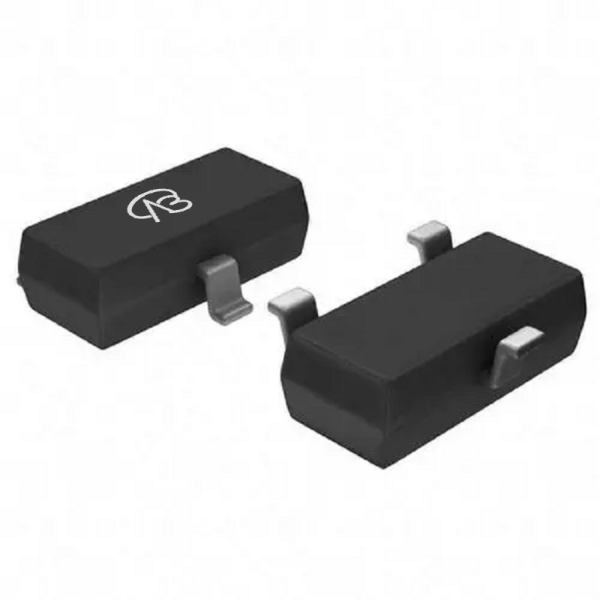
Comparative Analysis: AO3423 (P-channel) vs. VB2290
Analysis of the Original Model (AO3423) Core:
This is a 20V P-channel MOSFET from AOS, using a compact SOT-23 package. Its design core is to provide excellent RDS(ON) and low gate charge operation in a minimal footprint, capable of operating at gate voltages as low as 0.5V. The key advantages are: a low on-resistance of 118mΩ at a 4.5V drive voltage, and it can provide a continuous drain current of 2A. This makes it highly suitable for space-constrained load switch applications.
Compatibility and Differences of the Domestic Alternative (VB2290):
VBsemi's VB2290 also uses the standard SOT23-3 package and is a direct pin-to-pin compatible alternative. The main differences lie in the enhanced electrical parameters: VB2290 features a significantly lower on-resistance of 65mΩ@4.5V and a higher continuous current rating of -4A, while maintaining the same -20V voltage rating.
Key Application Areas:
Original Model AO3423: Its characteristics are very suitable for low-current load switching and power management in portable electronics, IoT devices, and battery-powered applications where minimal gate drive voltage and compact size are critical.
Alternative Model VB2290: Offers a performance-upgraded alternative with lower conduction loss and higher current capability, making it suitable for similar compact applications but where improved efficiency or higher load current is required.
Comparative Analysis: AOSD21311C (Dual P-channel) vs. VBA4338
Analysis of the Original Model (AOSD21311C) Core:
This is a dual 30V P-channel MOSFET from AOS in an SOIC-8 package. Its design pursuit is to offer balanced dual-switch performance in a standard footprint. The core advantages are: an on-resistance of 64mΩ per channel at 4.5V drive, a threshold voltage (Vgs(th)) of 2.2V, and it is rated for a continuous current of 4.1A per channel.
Compatibility and Differences of the Domestic Alternative (VBA4338):
The domestic alternative VBA4338 belongs to the 'performance-enhanced' choice in the same SOP8 package. It achieves comprehensive surpassing in key parameters: the same -30V voltage rating, but a significantly lower on-resistance of 45mΩ@4.5V (35mΩ@10V) and a higher continuous current rating of -7.3A per channel.
Key Application Areas:
Original Model AOSD21311C: Its dual P-channel configuration and parameters make it an ideal choice for space-efficient power management circuits requiring multiple switches, such as in power distribution, battery protection, or load switching modules.
Alternative Model VBA4338: Is more suitable for upgraded scenarios demanding lower conduction loss and higher current handling per channel in dual-switch applications, such as in more efficient power path management or higher-current load switches.
Conclusion
In summary, this comparative analysis reveals two clear selection paths:
For ultra-compact, low-current P-channel switching, the original AO3423 offers a proven solution with low-voltage gate operation. Its domestic alternative VB2290 provides a compatible upgrade with lower RDS(ON) and higher current capability.
For dual P-channel applications in a standard package, the original AOSD21311C provides balanced performance. Its domestic alternative VBA4338 offers a significant performance enhancement with much lower on-resistance and higher current capacity.
The core conclusion is: There is no absolute superiority or inferiority in selection; the key lies in precise matching of requirements. In the context of supply chain diversification, domestic alternative models not only provide feasible backup options but also achieve surpassing in specific parameters, offering engineers more flexible and resilient choice space in design trade-offs and cost control.

Download PDF document
 Download now


