 中文
中文 English
MOSFET Selection for Compact and High-Voltage Applications: AO3400C, AOB11S65L vs. China Alternatives VB1330, VBL165R18
Number of views:9999
 Back to previous page
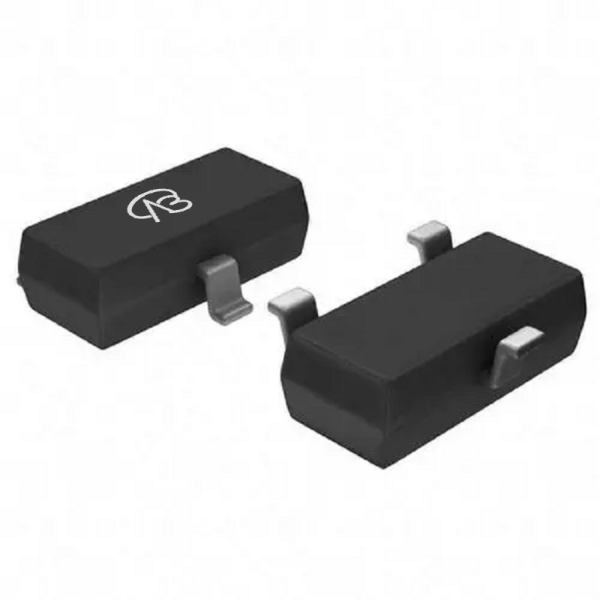
Comparative Analysis: AO3400C (N-channel) vs. VB1330
Analysis of the Original Model (AO3400C) Core:
This is a 30V N-channel MOSFET from AOS in a compact SOT-23 package. Its design core is to provide reliable power switching in minimal space for low-voltage applications. Key advantages include a continuous drain current (Id) of 6.2A and a low on-resistance (RDS(on)) of 20mΩ at 4.5V gate drive. It is described as a power switch device, not intended for high-speed signals, making it ideal for basic switching and load control.
Compatibility and Differences of the Domestic Alternative (VB1330):
VBsemi's VB1330 is a pin-to-pin compatible alternative in the same SOT23-3 package. The key differences are in electrical parameters: while both are 30V N-channel devices, VB1330 offers a slightly higher continuous current rating of 6.5A. However, its on-resistance is higher at 33mΩ (@4.5V) compared to the original's 20mΩ. It features a Trench process.
Key Application Areas:
Original Model AO3400C: Its balance of small size, 6.2A current, and low 20mΩ RDS(on) makes it suitable for space-constrained, efficiency-sensitive low-voltage switching.
Load switches and power management in portable electronics, USB-powered devices.
DC-DC converter side switches in low-power applications.
General-purpose switching in 5V-12V systems.
Alternative Model VB1330: A viable alternative for applications where the slightly higher RDS(on) is acceptable, but pin compatibility and a marginally higher current rating (6.5A) are beneficial. Suitable for similar low-voltage switching roles where cost or supply chain diversification is a priority.
Comparative Analysis: AOB11S65L (N-channel) vs. VBL165R18
This comparison shifts to high-voltage applications, where the design pursuit is a balance of high voltage withstand, current capability, and switching efficiency.
Analysis of the Original Model (AOB11S65L) Core:
This is a 650V N-channel MOSFET from AOS in a TO-263 (D2PAK) package. Its core advantages are:
High Voltage Rating: A 650V drain-source voltage (Vdss) makes it suitable for off-line and high-voltage DC-DC applications.
Good Current Handling: A continuous drain current (Id) of 11A.
Moderate Conduction Performance: An on-resistance (RDS(on)) of 399mΩ at 10V gate drive.
Compatibility and Differences of the Domestic Alternative (VBL165R18):
VBsemi's VBL165R18, also in a TO-263 package, presents a "performance-enhanced" alternative. While both are 650V devices, the key differences are significant:
Higher Current Capability: VBL165R18 boasts a much higher continuous current rating of 18A compared to the original's 11A.
Comparable/Adjusted On-Resistance: Its RDS(on) is 430mΩ (@10V), which is slightly higher than the original's 399mΩ, but this is traded against the substantially increased current rating. It utilizes a Planar process.
Key Application Areas:
Original Model AOB11S65L: Its 650V/11A rating makes it a solid choice for medium-power off-line applications.
Power Factor Correction (PFC) stages in SMPS.
Motor drives for appliances and industrial controls.
High-voltage DC-DC converters and inverters.
Alternative Model VBL165R18: Is more suitable for upgraded scenarios demanding higher current capability (18A) within the same 650V class. It offers a significant margin for higher power density designs or where lower conduction losses at higher currents are desired, despite a slightly higher RDS(on). Ideal for more demanding high-voltage switching applications.
Conclusion
In summary, this analysis reveals two distinct selection paths based on voltage class:
For compact, low-voltage (30V) N-channel switching, the original AO3400C, with its low 20mΩ RDS(on) and 6.2A current in a tiny SOT-23, is an excellent choice for space and efficiency-critical designs. Its domestic alternative VB1330 offers direct pin compatibility and a slight current increase to 6.5A, making it a viable backup or alternative, albeit with a compromise on conduction loss (33mΩ).
For high-voltage (650V) N-channel applications, the original AOB11S65L provides a reliable 650V/11A solution. The domestic alternative VBL165R18 stands out as a compelling "performance-enhanced" option, offering a substantially higher 18A current rating—a significant upgrade for designs requiring higher power handling within the same voltage and package footprint.
The core conclusion is that selection hinges on precise requirement matching. In the context of supply chain diversification, domestic alternatives like VB1330 and VBL165R18 not only provide feasible backup options but can also offer parameter enhancements (like higher current), giving engineers greater flexibility and resilience in design trade-offs and cost control. Understanding each device's design intent and parameter implications is key to maximizing its value in the circuit.

Download PDF document
 Download now


