 中文
中文 English
MOSFET Selection for Compact Power Applications: 2N7002VC-7, DMTH4008LPSQ-13 vs. China Alternatives VBTA3615M, VBQA1405
Number of views:9999
 Back to previous page
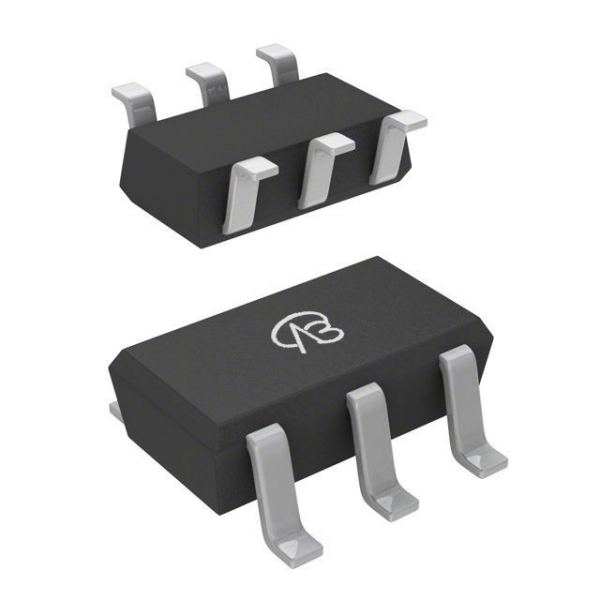
Comparative Analysis: 2N7002VC-7 (Dual N-channel) vs. VBTA3615M
Analysis of the Original Model (2N7002VC-7) Core:
This is a 60V dual N-channel MOSFET from DIODES, using an ultra-small SOT-563 package. Its design core is to provide reliable, low-power signal switching and amplification in a minimal footprint. The key advantages are: low gate threshold voltage, low input capacitance, and fast switching speed, facilitating easy interface with logic circuits. It features a continuous drain current of 280mA per channel and an on-resistance of 7.5Ω @10V, suitable for low-current applications. It is fully RoHS compliant and halogen-free.
Compatibility and Differences of the Domestic Alternative (VBTA3615M):
VBsemi's VBTA3615M is also a dual N-channel MOSFET in a small SC75-6 package, offering a pin-to-pin compatible alternative. The main differences lie in the electrical parameters: VBTA3615M shares the same 60V voltage rating but offers a significantly lower on-resistance of 1.2Ω @10V (vs. 7.5Ω). However, its continuous current rating is 0.3A, which is comparable to the original's 280mA per channel.
Key Application Areas:
Original Model 2N7002VC-7: Its characteristics are very suitable for space-constrained, low-power signal-level switching. Typical applications include:
Load switches for portable/IoT devices: Controlling power to sensors, LEDs, or other low-current peripherals.
Logic level translation and interface circuits.
Signal multiplexing and general-purpose switching in consumer electronics.
Alternative Model VBTA3615M: More suitable for applications requiring similar voltage and current but improved conduction loss (lower RDS(on)) in a compatible footprint, such as upgraded low-power switch designs.
Comparative Analysis: DMTH4008LPSQ-13 (Automotive N-channel) vs. VBQA1405
Unlike the dual N-channel model focusing on signal-level switching, the design pursuit of this automotive-grade N-channel MOSFET is high-current handling with robustness and reliability.
The core advantages of the original model are reflected in three aspects:
Automotive Grade Reliability: It is AEC-Q101 qualified with PPAP support, making it designed for harsh automotive environments.
High Current Capability: It can handle a continuous drain current as high as 64.8A.
Low Conduction Loss: Features a low on-resistance of 8.8mΩ @10V, minimizing power loss in high-current paths. The PowerDI5060-8 package offers good thermal performance.
The domestic alternative VBQA1405 belongs to the 'performance-competitive' choice: It achieves strong parity or improvement in key parameters: the same voltage rating of 40V, an even higher continuous current of 70A, and a significantly lower on-resistance of 4.7mΩ (@10V). This means it can offer lower conduction losses and higher current margin in similar applications.
Key Application Areas:
Original Model DMTH4008LPSQ-13: Its automotive qualification, high current, and low RDS(on) make it an ideal choice for demanding automotive and industrial applications. For example:
Brushless DC (BLDC) motor control in automotive systems (e.g., pumps, fans).
High-current DC-DC converters in 12V/24V automotive power systems.
Load switches for high-power modules.
Alternative Model VBQA1405: Is highly suitable for applications requiring very high current capability and ultra-low conduction loss, such as high-power DC-DC converters, motor drives, or power distribution switches, where automotive qualification of the original is not a strict requirement.
In summary, this comparative analysis reveals two clear selection paths:
For dual N-channel, low-power signal switching in ultra-compact spaces, the original model 2N7002VC-7, with its logic-level compatibility and proven reliability in a tiny SOT-563 package, demonstrates strong advantages for interface and control circuits in consumer electronics. Its domestic alternative VBTA3615M offers a package-compatible solution with significantly lower on-resistance, providing an efficiency upgrade for similar low-current applications.
For high-current, high-reliability N-channel applications, the original model DMTH4008LPSQ-13, with its AEC-Q101 certification, 64.8A current rating, and low 8.8mΩ RDS(on), is the definitive choice for automotive and other ruggedized applications. The domestic alternative VBQA1405 provides a compelling "performance-enhanced" option with even higher current (70A) and lower RDS(on) (4.7mΩ), making it excellent for demanding non-automotive power applications where maximum efficiency and current handling are critical.
The core conclusion is: There is no absolute superiority or inferiority in selection; the key lies in precise matching of requirements. In the context of supply chain diversification, domestic alternative models not only provide feasible backup options but also achieve strong competitiveness in specific parameters, offering engineers more flexible and resilient choice space in design trade-offs and cost control. Understanding the design philosophy and parameter implications of each device is essential to maximize its value in the circuit.

Download PDF document
 Download now


