 中文
中文 English
MOSFET Selection for Signal Switching & Moderate Power: 2N7002KQ-13, ZXMN6A11GTA vs. China Alternatives VB162K, VBJ1695
Number of views:9999
 Back to previous page
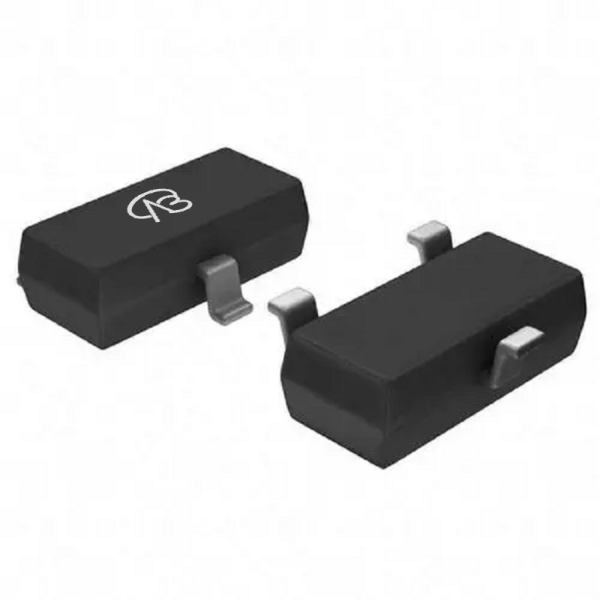
Comparative Analysis: 2N7002KQ-13 (Small-Signal N-channel) vs. VB162K
Analysis of the Original Model (2N7002KQ-13) Core:
This is a 60V small-signal N-channel MOSFET from DIODES in a compact SOT-23 package. Its design core is to minimize on-resistance while maintaining excellent switching performance for efficient power management in signal-level applications. Key advantages include a continuous drain current of 380mA and an on-resistance (RDS(on)) of 2Ω at a 10V gate drive.
Compatibility and Differences of the Domestic Alternative (VB162K):
VBsemi's VB162K is offered in a compatible SOT23-3 package. The main differences are in electrical parameters: VB162K matches the 60V voltage rating but features a significantly lower on-resistance of 2.8Ω @10V. However, its continuous current rating is slightly lower at 300mA.
Key Application Areas:
Original Model 2N7002KQ-13: Ideal for general-purpose signal switching, level shifting, and low-current load switching in various electronic circuits, such as in consumer electronics, IoT sensor interfaces, and logic circuits.
Alternative Model VB162K: Suitable as a direct replacement in most 2N7002KQ-13 applications where the slightly lower current rating is acceptable, offering the benefit of lower conduction loss.
Comparative Analysis: ZXMN6A11GTA (Power N-channel) vs. VBJ1695
This comparison shifts to power MOSFETs focused on higher current handling with low on-resistance in a compact footprint.
Analysis of the Original Model (ZXMN6A11GTA) Core:
This 60V N-channel MOSFET from DIODES uses a SOT-223 package, balancing power handling and size. Its design pursues low on-resistance for higher efficiency. Key advantages are a continuous drain current of 4.4A and a low on-resistance of 180mΩ at 4.5V gate drive.
Compatibility and Differences of the Domestic Alternative (VBJ1695):
VBsemi's VBJ1695 comes in a compatible SOT-223 package and represents a "performance-enhanced" alternative. It matches the 60V rating but offers superior key parameters: a higher continuous current of 4.5A and a significantly lower on-resistance of 85mΩ @4.5V (76mΩ @10V).
Key Application Areas:
Original Model ZXMN6A11GTA: Well-suited for moderate-power switching applications such as DC-DC converter switches, motor drivers for small fans or pumps, and power management in compact devices like set-top boxes or adapters.
Alternative Model VBJ1695: An excellent upgrade choice for applications demanding lower conduction losses and higher efficiency, such as in more demanding DC-DC circuits, higher-current load switches, or motor drives where thermal performance is critical.
Conclusion:
This analysis reveals two distinct selection paths:
For small-signal switching, the 2N7002KQ-13 is a proven general-purpose choice. Its domestic alternative VB162K offers a compatible, lower-RDS(on) option for applications where its 300mA current is sufficient.
For moderate-power switching, the ZXMN6A11GTA provides a good balance of current and RDS(on) in a SOT-223 package. The domestic alternative VBJ1695 stands out as a performance-enhanced option, offering significantly lower on-resistance for improved efficiency and thermal performance in upgrade scenarios.
The core conclusion is that selection hinges on precise requirement matching. In the context of supply chain diversification, domestic alternatives like VB162K and VBJ1695 not only provide viable backup options but also offer performance advantages in key parameters, giving engineers greater flexibility and resilience in design trade-offs and cost control.

Download PDF document
 Download now


