 中文
中文 English
MOSFET Selection for Signal Switching and Medium-Voltage Applications: 2N7002AQ-13, ZVP4525GTA vs. China Alternatives VB162K, VBJ2251K
Number of views:9999
 Back to previous page
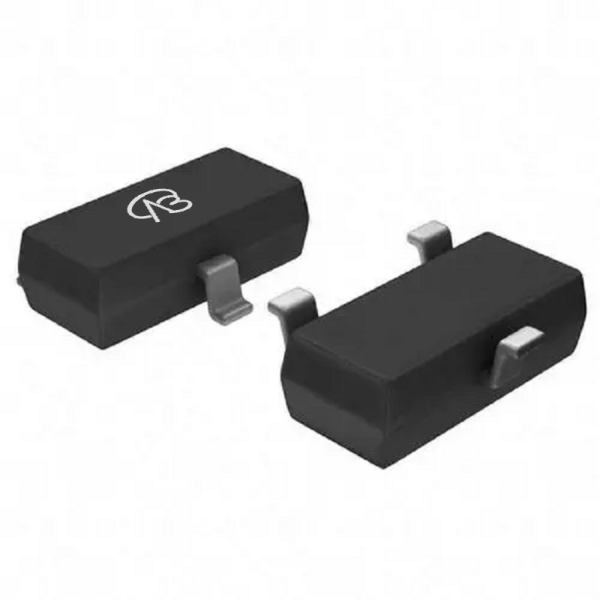
Comparative Analysis: 2N7002AQ-13 (N-channel) vs. VB162K
Analysis of the Original Model (2N7002AQ-13) Core:
This is a 60V N-channel MOSFET from DIODES in a compact SOT-23 package. Its design core is to provide reliable, automotive-grade signal switching and low-power control. Key advantages include its AEC-Q101 qualification and PPAP support, making it robust for harsh environments. It features a continuous drain current (Id) of 220mA and an on-resistance (RDS(on)) of 3Ω at 10V gate drive.
Compatibility and Differences of the Domestic Alternative (VB162K):
VBsemi's VB162K is also offered in an SOT-23 package and serves as a functional alternative. The main differences are in electrical parameters: VB162K matches the 60V voltage rating but offers a significantly lower on-resistance of 2.8Ω at 10V. However, its continuous current rating is 0.3A (300mA), which is slightly higher than the original's 220mA.
Key Application Areas:
Original Model 2N7002AQ-13: Its automotive-grade reliability makes it ideal for signal-level switching and interface protection in demanding applications.
Automotive body control modules: Load switching for LEDs, sensors, or small solenoids.
Industrial control I/O protection: Signal line switching and isolation.
Consumer electronics: Low-side switch for low-power loads.
Alternative Model VB162K: Suitable for general-purpose 60V signal switching and low-power control applications where lower conduction loss is beneficial, and full automotive qualification is not mandatory.
Comparative Analysis: ZVP4525GTA (P-channel) vs. VBJ2251K
This P-channel MOSFET is designed for medium-voltage applications where a unique combination of voltage withstand and switching performance is required.
Analysis of the Original Model (ZVP4525GTA) Core:
This 250V P-channel MOSFET from DIODES uses an SOT-223 package. Its design core leverages a trench structure to achieve a balance between low on-resistance and fast switching for efficient power management. Key parameters include a -250V drain-source voltage, a continuous current of -265mA, and an on-resistance of 18Ω at -10V gate drive.
Compatibility and Differences of the Domestic Alternative (VBJ2251K):
VBsemi's VBJ2251K, also in an SOT-223 package, presents a "performance-enhanced" alternative. It matches the -250V voltage rating but offers dramatically improved key parameters: a much higher continuous current of -2.1A and a significantly lower on-resistance of 1.2Ω at -10V.
Key Application Areas:
Original Model ZVP4525GTA: Its 250V rating and balanced performance make it suitable for medium-voltage, medium-current switching and power management.
High-side switching in offline auxiliary power supplies.
Polarity protection and load switching in 48V/100V+ systems.
Efficient power management in industrial controls.
Alternative Model VBJ2251K: Ideal for upgraded applications requiring much higher current capability and lower conduction loss at the same 250V level, such as in more demanding power path management or higher-current switch-mode power supplies.
Conclusion
In summary, this analysis reveals two distinct selection paths:
For automotive-grade or high-reliability N-channel signal switching, the original 2N7002AQ-13, with its AEC-Q101 certification and proven performance, remains the preferred choice for critical applications. Its domestic alternative VB162K offers a compatible package with lower on-resistance and slightly higher current, suitable for cost-sensitive or less stringent reliability applications.
For medium-voltage P-channel applications, the original ZVP4525GTA provides a solid solution with its 250V rating and trench technology benefits. The domestic alternative VBJ2251K offers substantial "performance enhancement" with significantly higher current rating and lower on-resistance, enabling upgrades in power density and efficiency for suitable designs.
The core conclusion is that selection depends on precise requirement matching. Domestic alternatives not only provide viable backup options but can also offer superior performance in specific parameters, giving engineers greater flexibility in design trade-offs and cost control. Understanding the design intent and parameter implications of each device is key to maximizing its value in the circuit.

Download PDF document
 Download now


